What Exactly Is a DB Killer
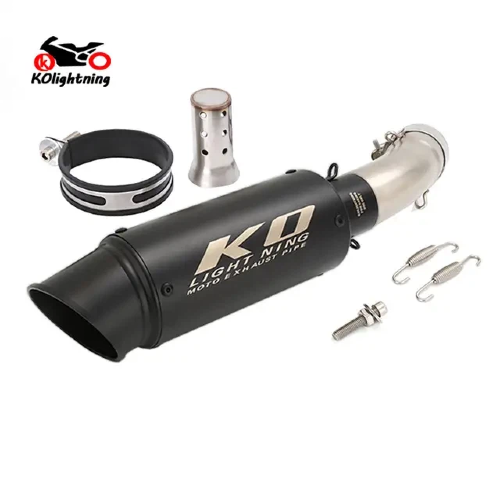
Motorcycle exhaust systems are designed to channel exhaust gases efficiently while managing both sound and performance. A DB Killer—short for Decibel Killer—is a small, removable insert placed inside the muffler or exhaust outlet. Its main purpose is to reduce sound output without completely blocking airflow.
Riders often argue about whether a DB Killer restricts the engine, leading to power loss. Others claim that removing it increases performance. The truth, however, is more nuanced. The effect of a DB Killer depends on how it interacts with your exhaust flow, engine tuning, and riding conditions.
A DB Killer can be seen as an acoustic filter—it alters the pressure waves and turbulence in your exhaust. If designed correctly, it allows the engine to breathe efficiently while lowering decibel levels. But when poorly fitted or mismatched, it can create excess back pressure, affecting throttle response and exhaust temperature. Understanding these dynamics helps riders make an informed decision about whether to keep or remove it.
Understanding How a DB Killer Works in a Motorcycle Exhaust
Airflow and Sound in Exhaust Systems
When fuel combusts inside a motorcycle engine, it produces high-pressure gases that exit through the exhaust valves. These gases carry sound waves—rapid pulses of pressure—which are responsible for the familiar motorcycle roar.
In an ideal exhaust system, gases exit smoothly and quickly. However, a completely unrestricted exhaust (like a straight pipe) can create chaotic airflow, resulting in loud noise, unstable low-end power, and even reduced torque at lower RPMs.
How a DB Killer Changes Exhaust Dynamics
A DB Killer sits near the exhaust tip and partially restricts gas flow through a perforated or tapered insert. This design causes sound waves to collide, reflect, and dissipate—reducing overall noise output. The structure creates mild back pressure, which helps stabilize exhaust scavenging and smooth engine operation.
In short:
It reduces noise by breaking and absorbing sound energy.
It balances airflow, preventing turbulence.
It maintains street legality while minimizing performance loss.
DB Killer Design Components
Component | Function |
Perforated tube | Allows exhaust gases and sound energy to escape in a controlled manner |
End cap or baffle | Shapes gas flow and modifies sound frequency |
Packing material (optional) | Absorbs high-frequency vibrations for a deeper tone |
Mounting screw | Secures the DB Killer and prevents unwanted movement |
The geometry—diameter, hole pattern, and taper angle—affects both sound tone and exhaust resistance. A precisely engineered DB Killer can achieve up to 30% noise reduction with only 2–3% power deviation.
The Relationship Between DB Killer and Engine Performance
What Is Back Pressure?
Back pressure is the resistance that exhaust gases encounter when leaving the engine. It’s often misunderstood: while too much back pressure reduces power, a moderate level is necessary to create exhaust pulse timing that helps evacuate burnt gases effectively.
When Back Pressure Helps
Improves low-end torque and smooth acceleration
Enhances fuel combustion at moderate speeds
Prevents reversion (exhaust gases flowing back into the chamber)
When Back Pressure Hurts
Restricts top-end performance and horsepower
Causes engine overheating or excessive exhaust temperature
Reduces fuel efficiency and creates unwanted vibration
Condition | Effect on Performance | Engine Risk |
Too much back pressure | Lower horsepower, sluggish response | Valve overheating, possible stress |
Too little back pressure | Weak low-end torque, poor throttle feel | Reduced drivability |
Balanced flow | Smooth torque curve and efficient power delivery | Optimal condition |
A properly designed DB Killer maintains this balance—offering quiet operation without choking the engine.
![DB Killer]()
Common Myths About DB Killers Being Harmful to Engines
Myth 1: DB Killers Choke the Engine
Only cheap or poorly engineered DB Killers restrict airflow enough to hurt performance. Premium models are designed using fluid dynamics principles that maintain optimal velocity while cutting noise.
Myth 2: Removing a DB Killer Always Improves Power
In reality, removing it can disrupt the air-fuel ratio. Modern engines, especially those with electronic fuel injection (EFI), are calibrated for specific exhaust pressures. Removing the DB Killer without remapping can cause lean running, overheating, or premature valve wear.
Myth 3: All DB Killers Are the Same
DB Killers vary in diameter, length, hole pattern, and taper angle. The design for a 250cc commuter differs drastically from one for a 1000cc superbike. Choosing a mismatched type can either make the bike too quiet or severely restrict flow.
Real Effects of DB Killers on Different Engine Types
Engine Type | DB Killer Impact | Performance Notes |
Small engines (≤250cc) | Slight torque boost | Benefits from mild back pressure |
Mid-range (300–600cc) | Balanced noise and power | Ideal for everyday and touring rides |
High-displacement (>600cc) | Minimal flow restriction | Negligible power loss at high RPM |
The impact of a DB Killer varies significantly depending on engine size and design. Small engines, such as those on scooters or lightweight motorcycles, rely heavily on exhaust pulse pressure for efficient combustion and torque delivery. Installing a correctly sized DB Killer can slightly boost low-end torque, improve throttle response, and maintain smoother acceleration. It also helps reduce the high-frequency noise that can be fatiguing on long rides.
Mid-range motorcycles, including commuter bikes and mid-size sport or touring models, benefit from DB Killers that balance noise reduction with power retention. Properly designed DB Killers in this range allow riders to enjoy quieter exhaust tones without sacrificing mid-range performance, making them ideal for daily commuting and long-distance touring.
For high-displacement engines above 600cc, gas velocity is naturally high, and exhaust flow is less impacted by the small restriction of a DB Killer. Riders will experience negligible power loss at high RPMs, while still enjoying reduced noise levels and smoother engine operation. Overall, the right DB Killer enhances performance consistency, rider comfort, and compliance with sound regulations across all engine types.
Signs That Your DB Killer Might Be Hurting Performance
Even good hardware can fail if installed or maintained incorrectly. Look out for these indicators:
Noticeable drop in throttle response or top speed
Rattling or metallic sound from the exhaust tip
Excessive heat buildup or discoloration near muffler joints
Black soot or carbon deposits at the outlet
Unstable idle or popping sounds during deceleration
These symptoms often result from clogged perforations, loose mounting screws, or incorrect alignment. Regular cleaning and inspection every 3,000–5,000 km help maintain optimal performance.
How to Optimize Performance When Using a DB Killer
1. Correct Installation
Ensure a snug but not overly tight fit. Use anti-seize compound on screws to prevent corrosion. Improper sealing can cause vibration or gas leakage.
2. Choose the Right Diameter
A difference of even 2mm in exit diameter can significantly change exhaust flow. Always match the DB Killer’s outlet with your muffler’s internal diameter.
3. Tune the ECU or Carburetor
If you add or remove a DB Killer, recalibrate your ECU or carb jets. Proper tuning prevents running lean and stabilizes power delivery.
4. Select Proper Materials
Material | Features | Durability |
Stainless Steel | Corrosion-resistant, cost-effective | ★★★★☆ |
Titanium | Ultra-light, handles high temperatures | ★★★★★ |
Carbon Fiber | Lightweight, sound-absorbing aesthetics | ★★★★☆ |
Aluminum | Light but weak under heat cycles | ★★★☆☆ |
Durability and heat resistance are vital since exhaust tips reach 400–600°C during operation.
5. Maintenance
Remove and clean the DB Killer periodically. Use a wire brush and degreaser to clear carbon buildup. Avoid water-based cleaners, as trapped moisture can accelerate rusting.
When Removing the DB Killer Makes Sense
Track or Race Use
Racers often remove DB Killers for maximum exhaust velocity and raw sound. However, these setups are not legal on public roads, as they can exceed 100–120 dB(A)—well above noise limits.
Off-Road or Testing Conditions
During performance tuning, removing the DB Killer allows testing of different fuel maps and sound profiles.
Customizable DB Killers
Modern adjustable DB Killers let riders switch between quiet and aggressive modes using interchangeable inserts. This versatility makes them perfect for riders who commute on weekdays and race on weekends.
Legal and Environmental Considerations
Noise Regulations Around the World
Region | Maximum Street Noise Limit | Legal Requirement |
EU (Directive 97/24/EC) | 80–82 dB(A) | Homologated mufflers only |
USA (EPA Standard) | 80 dB(A) | DOT-approved exhausts |
Japan / South Korea | 83–94 dB(A) | Varies by engine size |
Australia / UK | 94 dB(A) | Subject to roadside testing |
Why DB Killers Help Compliance
Keep sound levels within legal limits
Prevent fines or inspection failures
Maintain positive community perception
Reduce fatigue on long rides
Environmental and Mechanical Benefits
A good DB Killer doesn’t just reduce noise—it improves mechanical stability by:
Controlling resonance vibrations that can crack welds
Reducing exhaust valve stress
Promoting smoother combustion
Preventing exhaust leaks and thermal distortion
Conclusion
After reviewing the engineering principles and performance data, it’s clear that a DB Killer isn’t harmful to engines—provided it’s properly designed, installed, and tuned for your exhaust system. The key is achieving balance: too much restriction can reduce power, while too little flow causes inefficiency. A precision-engineered DB Killer delivers smoother throttle response, reduced vibration, and full compliance with sound regulations.
For riders seeking both performance and control, choosing high-quality DB Killers makes all the difference. BLUE STAR TRADING LIMITED, a trusted supplier of advanced motorcycle exhaust components, offers durable and customizable DB Killers engineered for optimal airflow and sound balance. To find the right solution for your bike or request expert assistance, visit BLUE STAR TRADING LIMITED today and discover how precision design can elevate your ride experience.