Upgrading a motorcycle exhaust fundamentally alters engine breathing dynamics. Riders constantly face the dilemma of wanting to upgrade exhaust sound and performance without inadvertently destroying their motorcycle’s miles-per-gallon (MPG) efficiency. When you change how exhaust gases exit the cylinder, you change how the engine manages fuel. Without proper fuel management, this modification can lead to severe drops in fuel economy, engine overheating, and degraded low-end drivability.
Fuel economy changes are not random. They are dictated by the specific exhaust type you choose, the ECU mapping applied, and your behavior on the throttle. A freer-flowing pipe requires a precise adjustment in fuel delivery to maintain optimal combustion. Failing to address this balance forces the engine to run lean, prompting riders to twist the throttle harder just to achieve normal acceleration. This guide provides a technical framework for evaluating aftermarket exhausts and mitigating fuel consumption risks.
Exhaust Type Dictates Impact: A slip-on exhaust system generally causes negligible changes to fuel economy, whereas a full exhaust system drastically alters the air-to-fuel ratio (AFR) and requires intervention.
Tuning is Non-Negotiable for Full Systems: Installing a full system without an ECU flash or fuel controller forces the engine to run lean, which can paradoxically increase fuel consumption due to efficiency losses and throttle overcompensation.
Weight Reduction vs. Flow Dynamics: While aftermarket systems reduce overall motorcycle weight (theoretically improving MPG), this benefit is easily negated by poor exhaust scavenging if the system is improperly matched to the engine.
The Psychological Variable: The most common cause of a sudden MPG drop post-installation is rider behavior—specifically, aggressive throttle application to hear the new exhaust note.
The Science of Engine Breathing and Fuel Efficiency
Internal combustion engines operate as highly calibrated air pumps relying on a precise stoichiometric ratio, known as the Air-to-Fuel Ratio (AFR). For gasoline engines, this ideal ratio is roughly 14.7 parts air to one part fuel. Changing the exhaust alters the volume and speed of air exiting the cylinder. A freer-flowing exhaust allows more air to escape quickly, meaning more fresh air enters during the intake stroke. To maintain that perfect ratio, the engine must receive a corresponding increase in fuel delivery. If fuel delivery remains static while airflow increases, the engine runs lean, leading to inefficient combustion and wasted energy.
A persistent myth in the motorcycle community is that engines require back pressure to run correctly. In reality, engines need optimal exhaust gas velocity and effective scavenging. Scavenging is the process where properly designed pipes use negative pressure waves to pull spent gases out of the combustion chamber. As the exhaust pulse travels down the pipe, it creates a vacuum behind it, drawing the next charge of fresh air and fuel into the cylinder. If an exhaust pipe is too large, gas velocity drops, the scavenging effect weakens, and the engine loses low-end torque. You end up burning more fuel to achieve the same forward momentum.
Factory exhaust setups are heavily restricted by design. Stock catalytic converters and complex internal baffling create excessive resistance that chokes engine performance. Manufacturers implement these restrictions to meet stringent global noise and emissions regulations. This resistance forces the engine to work harder to push exhaust gases out. Under heavy loads, a highly restrictive factory exhaust can cause the engine to burn fuel less efficiently. Relieving this restriction improves thermal efficiency, provided the fueling is adjusted to match.
Modern motorcycles manage fuel delivery using advanced Electronic Fuel Injection (EFI) systems operating in either closed-loop or open-loop modes. In closed-loop operation, usually during steady cruising speeds, the motorcycle uses oxygen (O2) sensors in the exhaust to monitor the AFR in real-time. The ECU makes micro-adjustments to keep fueling optimal. However, aftermarket exhausts can drastically increase airflow, pushing these sensors beyond their narrow factory adjustment parameters. When you accelerate hard, the system switches to open-loop mode, relying entirely on a pre-programmed static fuel map. If that map expects a restrictive factory exhaust but encounters a high-flow aftermarket system, fuel efficiency plummets.
The ECU reads data from the O2 sensor during steady throttle application.
It compares the current exhaust oxygen levels against the target AFR map.
The system adjusts injector pulse width to add or remove fuel.
During hard acceleration, the system ignores the O2 sensor and defaults to the base map.
Slip-on Exhaust System vs. Full Exhaust System: Fuel Economy Impacts
Understanding the difference between exhaust types is crucial for predicting fuel economy changes. The impact on your wallet at the gas pump depends entirely on how much of the factory plumbing you replace.
Evaluating a Slip-on Exhaust System
A Slip-on Exhaust System offers a straightforward upgrade path. Technically, this modification only replaces the rear muffler section of the motorcycle. The factory headers, mid-pipes, and the catalytic converter remain completely intact. Because the catalytic converter creates the majority of the exhaust restriction, leaving it in place means the overall airflow dynamics change very little.
The fuel economy outcome for a slip-on is generally negligible. Riders typically see a variance of only plus or minus one to two percent in their MPG. The factory ECU is more than capable of using its O2 sensors to compensate for the slight increase in airflow provided by a less restrictive muffler. You retain your factory fuel efficiency while gaining a more aggressive sound profile.
The implementation risk here is incredibly low. There is virtually no risk of engine damage from running dangerously lean. This makes it a highly scalable option for riders who want to improve their motorcycle's aesthetics and sound without taking on the additional costs of aftermarket tuning and fuel management modules.
Evaluating a Full Exhaust System
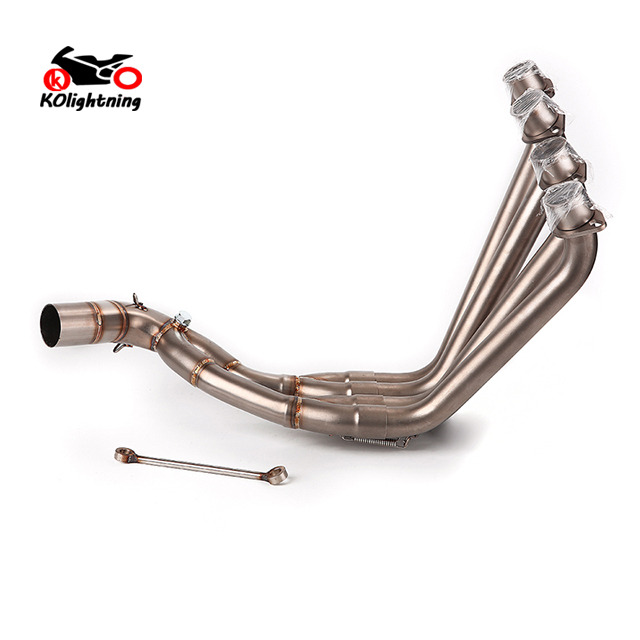
A Full Exhaust System represents a complete overhaul of the motorcycle's breathing apparatus. This technical scope involves replacing everything from the cylinder head down to the tailpipe. You remove the restrictive factory headers, delete the heavy catalytic converter, and often increase the overall diameter of the exhaust piping.
The fuel economy outcome here is drastic. By removing the catalytic converter and widening the pipes, you massively increase airflow. The factory ECU cannot add enough fuel to compensate, causing the bike to run dangerously lean. Furthermore, oversized header pipes can reduce exhaust gas velocity at lower RPMs, resulting in a noticeable loss of low-end torque. To compensate for this sluggish low-end response, riders instinctively use higher RPMs and wider throttle openings to get moving, which absolutely tanks fuel economy.
In the real world, owners frequently report a dramatic, immediate drop in range post-installation. It is not uncommon for a rider to suddenly find themselves needing to refuel every couple of rides or every other day if they run a full system without an updated fuel map. The engine struggles to operate efficiently outside its designed parameters.
The implementation risk for a full system is high. It requires mandatory secondary investments to stabilize fuel consumption and prevent excessive engine heat. Installing a full system is only half the job; tuning the motorcycle to handle the new airflow is an absolute requirement.
Implementation Risks: Why MPG Drops After an Exhaust Upgrade
When fuel economy drops after an exhaust installation, several mechanical and behavioral factors combine to drain your fuel tank faster than before.
Running lean directly causes a severe loss of efficiency. A lean condition means there is too much air and not enough fuel in the combustion chamber. While it sounds like you are using less fuel per cycle, the reality is that the engine produces significantly less power at low RPMs. Because the engine is weak in the lower rev range, you are required to use wider throttle openings just to achieve your normal commuting speeds. You end up dumping more fuel into the engine overall just to keep the motorcycle moving at a standard pace.
The loss of low-end torque is a primary culprit for poor city mileage. Oversized aftermarket header pipes reduce the velocity of the exhaust gases at lower RPMs. Without high velocity, the scavenging effect fails, and the engine struggles to clear spent gases from the cylinder. This shifts the motorcycle's powerband much higher up the rev range. While the bike might scream at high RPMs on a track, city commuting becomes highly fuel-inefficient because you are constantly operating in a dead zone of power.
Riders often experience a sudden, severe drop in mileage when the factory ECU fails to calculate open-loop fueling correctly. When you accelerate, the ECU ignores the O2 sensors and relies on a static map that expects a restrictive factory exhaust. The resulting chaotic fuel delivery cycles waste massive amounts of gasoline, drastically reducing your total range per tank.
We must also address the psychological factor of throttle habits. A new exhaust sounds incredible. The louder, more aggressive sound profile subconsciously encourages riders to accelerate harder, blip the throttle at stoplights, and hold gears longer to hear the engine sing. This behavioral reality is often the primary culprit behind reported MPG drops. If you ride aggressively to hear the exhaust, your fuel economy will suffer regardless of the tune.
Finally, there are emissions and compliance risks. Removing catalytic converters alters the chemical makeup of your exhaust gases. Non-compliant bikes run the risk of failing state or local inspections. Running a motorcycle dangerously lean with an unmapped full exhaust can cause excessive heat buildup, potentially burning exhaust valves and voiding manufacturer warranties.
How to Maintain or Improve MPG with an Aftermarket Motorcycle Exhaust System
Upgrading your exhaust does not have to destroy your fuel economy. With the right supporting modifications, you can stabilize and sometimes even improve your MPG.
ECU flashing and fuel management modules are the ultimate solutions. Piggyback controllers intercept the signal from the ECU and adjust the fuel delivery before it reaches the injectors. Alternatively, a direct ECU flash rewrites the factory fuel map entirely. By rewriting the fuel map to match the new exhaust flow, you restore the optimal AFR. This recovers lost low-end torque, allowing you to accelerate smoothly without excessive throttle, thereby stabilizing your cruising MPG.
To maximize efficiency, consider the intake-exhaust synergy. An engine is an air pump; improving the exit path is only half the equation. Pairing a high-flow Motorcycle Exhaust System with a clean, high-performance air filter and a custom dyno tune maximizes volumetric and thermal efficiency. When the engine breathes perfectly and the fueling is precise, the engine burns fuel more completely. This can occasionally result in better-than-factory cruising fuel economy, provided you maintain steady throttle habits.
Leveraging weight reduction also plays a role in overall efficiency. Factory exhaust systems are incredibly heavy, often weighing between 15 and 20 pounds due to dense catalytic converters and thick steel tubing. Replacing this with a 5-pound titanium or carbon fiber system significantly improves the motorcycle's power-to-weight ratio. Reducing the mass the engine must accelerate theoretically improves fuel efficiency, as less energy is required to move the bike.
Utilizing baffles and DB killers can help maintain efficiency for street riding. Many aftermarket exhausts come with removable inserts. Retaining or installing a DB killer restores a degree of back pressure and increases exhaust gas velocity at lower RPMs. This improves low-end torque, making the bike easier to ride in stop-and-go traffic and helping to preserve your fuel economy during daily commutes.
Decision Framework: Choosing the Right Exhaust for Your Goals
Selecting the right exhaust requires an honest assessment of how and where you ride your motorcycle. Aligning your hardware choices with your riding reality ensures you get the performance you want without unexpected fuel costs.
Commuters and touring riders have very different success criteria compared to track enthusiasts. If you use your motorcycle for daily commuting or long-distance touring, prioritize a slip-on exhaust. This choice retains crucial low-end torque, maintains factory MPG, and completely avoids the high costs associated with custom tuning. You get the aesthetic and auditory benefits without compromising the bike's daily utility.
Performance and track riders should opt for a full exhaust system. If your goal is maximum horsepower and top-end speed, removing the factory restrictions is necessary. You must accept that peak horsepower gains require a custom tune and will likely result in higher fuel consumption under heavy load. The track environment prioritizes power over efficiency.
Research and brand credibility matter immensely when evaluating flow dynamics. Choosing R&D-heavy, reputable brands ensures the exhaust was engineered specifically for your engine's pulse timing. Reputable manufacturers publish their flow dynamics and design their pipes to optimize exhaust velocity. Cheap, unbranded straight pipes often feature terrible internal designs that destroy exhaust velocity, ruin low-end torque, and absolutely tank fuel mileage.
Exhaust Type
Airflow Change
Tuning Required?
Fuel Economy Impact
Best For
Slip-on System
Minimal
No
Negligible (±1-2%)
Commuting, Sound Upgrade
Full System (Untuned)
Massive Increase
Yes (Mandatory)
Severe Drop (Runs Lean)
Not Recommended
Full System (Tuned)
Optimized Flow
Completed
Moderate Drop under load, stable at cruise
Track, Maximum Performance
Conclusion
A motorcycle exhaust system undeniably affects fuel economy, but the direction and severity of that change are entirely within your control. The impact depends on the exhaust type you choose, the presence of proper ECU tuning, and your own throttle discipline. Upgrading your exhaust is a balance of managing engine airflow and fuel delivery to maintain efficient combustion.
If you are strictly concerned with maintaining fuel economy and staying within a tight budget, limit your search to slip-on systems. Buyers seeking maximum performance must budget for a full system plus a professional tune to ensure the engine runs safely and efficiently.
Evaluate your current motorcycle’s factory exhaust setup to determine baseline restrictions.
Determine your budget for potential tuning before buying any full exhaust parts.
Consult with a certified tuner or reputable exhaust manufacturer to verify flow dynamics.
Commit to smooth throttle habits post-installation to preserve your cruising range.
FAQ
Q: Do I need to tune my motorcycle if I only install a slip-on exhaust system?
A: No, in most cases, a tune is not required for a slip-on exhaust. Because the catalytic converter and factory headers remain in place, the change in airflow is minimal. The factory ECU can typically adjust the fueling enough to compensate for the new muffler without any issues.
Q: Why did my fuel economy drop significantly after installing a full exhaust system?
A: A full system drastically increases airflow, causing the engine to run lean and lose low-end torque. To compensate for the sluggish low-end response, riders twist the throttle harder and use higher RPMs to accelerate, which heavily increases fuel consumption.
Q: Can an aftermarket motorcycle exhaust system actually improve my fuel mileage?
A: Yes, but usually only if it is a full system paired with a high-flow air filter and a precision custom tune. This combination optimizes the engine's volumetric efficiency, allowing it to burn fuel more completely at cruising speeds, provided your throttle habits remain smooth.
Q: How does a DB killer or baffle affect motorcycle fuel economy?
A: Installing a DB killer restricts the exhaust flow slightly, which increases exhaust gas velocity at lower RPMs. This restores low-end torque, meaning you don't have to rev the engine as high to accelerate from a stop, thereby helping to preserve fuel economy during city riding.
Q: Does removing the catalytic converter hurt fuel efficiency?
A: Removing the catalytic converter massively increases exhaust flow and alters the back pressure dynamics. Without a proper ECU tune to adjust the fuel maps for this new high-flow environment, the engine will run inefficiently, and your fuel economy will suffer noticeably.