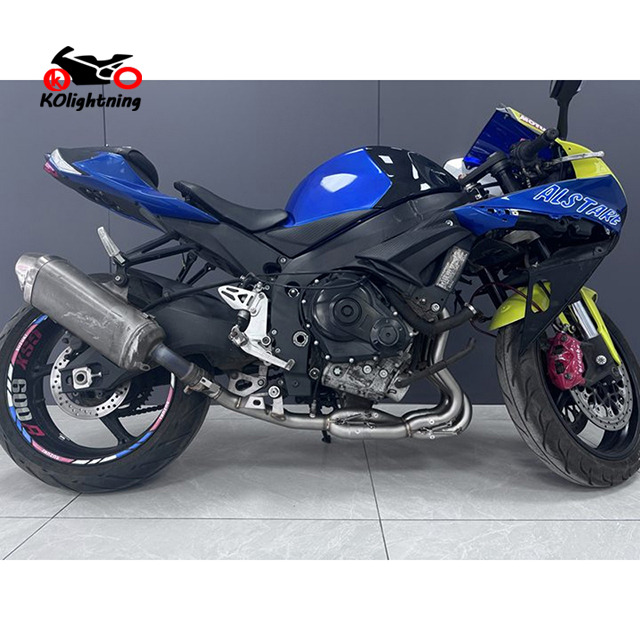
Upgrading your factory exhaust is often the very first modification you make after buying a bike. Riders universally crave better sound, lighter vehicle weight, and aggressive aesthetics immediately after leaving the dealership. However, you face a significant price and implementation gap between a simple muffler swap and a complete overhaul. This massive difference in complexity confuses many new owners. You might wonder if spending triple the money actually delivers a noticeably better daily ride.
Making the correct choice goes far beyond simply desiring a louder machine. You must evaluate your true performance goals and strict budget constraints carefully. The decision also hinges on your willingness to alter factory engine mapping parameters. Finally, you must consider local legal compliance regarding street use. By examining these crucial factors, you can find the perfect setup for your specific riding style. We will guide you through system architecture, true performance gains, and hidden installation risks to ensure you make an informed investment.
Key Takeaways
Cost vs. Value: Slip-on exhausts offer the best ROI for sound and aesthetic upgrades, typically costing 30–50% of a full system.
Tuning Requirements: Full systems mandate an ECU remap or aftermarket fuel controller to correct air-fuel ratios (AFR); slip-ons generally run safely on stock mapping.
Performance Truths: Manufacturer horsepower claims are often based on ideal dyno conditions. Slip-ons provide negligible power gains, while full systems deliver measurable increases only when properly tuned.
Compliance Risks: Full systems typically remove the factory catalytic converter, rendering them strictly for track/off-road use in emissions-regulated regions.
System Architecture: What Exactly Are You Replacing?
Before spending your money, you must understand basic exhaust anatomy. Factory systems contain multiple restrictive sections designed to meet strict global emissions standards. Modifying them safely requires knowing exactly which components you plan to remove.
The Slip-On Exhaust (Muffler Only/Mid-Pipe Back)
A Slip On Exhaust replaces only the restrictive factory muffler. This section sits at the very rear of your motorcycle. It serves as the final exit point for combustion gases.
It strictly retains the OEM exhaust headers attached to the engine block.
It preserves the factory catalytic converter on most modern street motorcycles.
It focuses entirely on altering the exhaust tone and acoustic signature.
It reduces heavy, unattractive rear-end bulk quickly and effectively.
By keeping the factory catalytic converter intact, engine backpressure remains relatively stable. You primarily change the sound profile rather than the fluid flow dynamics. The internal packing materials inside the new canister shape this audio output. They dampen harsh, raspy high frequencies. They allow deep, aggressive bass tones to pass through to your ears.
The Full Motorcycle Exhaust System
A complete Motorcycle Exhaust System takes a much more radical approach. It replaces the entire exhaust tract from front to back. You swap everything from the engine cylinder head all the way to the tailpipe.
It replaces heavy factory headers with optimized, larger-diameter piping. Manufacturers often utilize premium titanium or high-grade stainless steel.
It entirely eliminates the restrictive catalytic converter honeycomb.
It maximizes exhaust gas velocity and reduces engine backpressure significantly.
This comprehensive overhaul fundamentally changes how your engine breathes. Engineers design aftermarket headers using highly specific lengths and stepped diameters. They aim to optimize exhaust pulse scavenging. This scientific process pulls burnt gases out of the combustion chamber rapidly. It subsequently allows fresh air and fuel to enter the cylinder much more efficiently during valve overlap.
Performance vs. Hype: Evaluating True Power and Weight Gains
Riders often chase horsepower numbers aggressively. However, aftermarket marketing materials sometimes inflate actual performance gains. We must separate psychological riding sensations from verified dynamometer data.
Horsepower & Torque Realities
Manufacturers frequently test their systems under ideal laboratory conditions. Your real-world street results will definitely vary based on altitude, temperature, and bike condition.
Slip-ons: These modifications typically yield minor 1–2% peak horsepower gains. They barely change overall engine airflow. The perceived speed increase you feel is usually a psychological byproduct. A noticeably louder exhaust note simply tricks your brain into feeling faster acceleration.
Full Systems: These setups can yield 5–15% increases in peak horsepower. They also help optimize the mid-range torque curve. However, you only see these gains if you adjust the engine's air intake and ECU mapping. Unmapped full systems can actually lose power and ruin throttle response.
Weight Reduction Benefits
Stock motorcycle systems are incredibly bulky. They contain heavy steel baffles and dense catalytic honeycombs required to meet Euro5 and EPA regulations. Shedding this excess weight improves your riding experience drastically.
Slip-ons: You can typically save 3–10 lbs (1.5–4.5 kg). You simply ditch the massive factory muffler for a lightweight carbon fiber or titanium canister.
Full Systems: You can drop an impressive 10–20 lbs (4.5–9 kg). You replace the thick steel headers and remove the dense catalytic converter entirely.
Dropping this much physical mass improves your power-to-weight ratio. It also lowers your motorcycle's center of gravity. You will immediately notice quicker turn-in response on twisty mountain roads. Your suspension works far less to control chassis movement during hard braking.
Modification Type
Estimated Horsepower Gain
Average Weight Savings
ECU Tune Requirement
Slip-On Muffler
1% - 2%
3 - 10 lbs
Rarely Required
Full System (Untuned)
0% - 3% (Potential Loss)
10 - 20 lbs
Highly Recommended
Full System (Tuned)
5% - 15%
10 - 20 lbs
Strictly Mandatory
Implementation Risks: Installation and Engine Tuning Requirements
Changing exhaust components always introduces mechanical variables. You must understand engine tuning requirements to prevent catastrophic internal damage. Installation complexity also varies wildly between the two primary upgrade paths.
ECU Flashing and Air-Fuel Ratio (AFR) Management
Your engine requires a precise mixture of air and fuel to run optimally. Modifying airflow disrupts this delicate factory balance instantly.
The Lean Condition Risk: Installing a complete system drastically increases exhaust flow. Without an ECU tune, the engine runs dangerously lean. It ingests too much air and receives insufficient fuel. This condition leads to excessive combustion heat. You will experience aggressive decel-pop. It can even cause permanent exhaust valve damage over time.
Slip-on Safety: Modern closed-loop EFI systems feature sensitive oxygen sensors. They can usually adapt to the minor flow changes caused by a simple muffler swap. You rarely require an aftermarket fuel controller for these basic modifications.
Installation Complexity and Hidden Costs
Wrenching on your own motorcycle feels highly rewarding. Still, you must accurately assess your mechanical skill level before starting a tear-down.
Slip-on Installation: This ranks as a simple 30-to-60-minute DIY driveway project. You only need basic hand tools. You face a very low risk of mechanical error. You simply loosen a mid-pipe clamp, remove a hanger bolt, and swap the cans.
Full System Installation: This requires extensive teardowns. You must carefully remove plastic body fairings. You often need to drain engine coolant and shift radiators forward. You will handle delicate engine header studs. These steel studs carry a high risk of snapping on older, rusted bikes.
Sensor Management: Comprehensive setups often require rerouting or entirely bypassing factory oxygen (O2) sensors to avoid dashboard error codes.
Budgeting for Tuning: You must factor in an additional $200–$600 for professional dyno tuning. Mail-in ECU flashing services cost roughly the same. Failing to budget for a tune ruins the entire upgrade project.
Compliance, Warranties, and Everyday Usability
Upgrading your exhaust carries strict legal and financial implications. You must consider local laws and dealership policies before removing factory emissions equipment.
Emissions and Noise Regulations
Governments crack down on vehicle modifications strictly. Track organizations also enforce rigid sound limits to satisfy local neighborhoods.
Emissions Testing: Full systems remove the catalytic converter entirely. They will fail visual inspections instantly. They also fail tailpipe sniffer emissions tests used in highly regulated areas.
Sound Limits: Unbaffled race systems often exceed track-day decibel (dB) limits. You usually need to buy a dedicated dB killer insert to ride legally at noise-restricted circuits.
Street Legality: Simple muffler swaps are far more likely to retain legal compliance. They keep the critical factory emissions equipment untouched. You can easily find units homologated specifically for street use. Look for CARB-compliant or CE-approved stamps on the outer shell.
Dealership Warranty Implications
New motorcycle owners constantly worry about voiding their expensive factory warranties. Dealerships follow strict manufacturer guidelines regarding aftermarket modifications.
Consumer Protection: Laws like the Magnuson-Moss Warranty Act in the US protect buyers. A dealership cannot legally void your entire vehicle warranty simply because you changed a part.
Burden of Proof: However, they can legally deny a specific powertrain warranty claim. They must prove your aftermarket headers and non-factory tune directly caused the engine failure. If your engine runs lean and drops a valve, you pay the repair bill.
Low Risk Swaps: Basic muffler swaps rarely trigger complex warranty disputes. Dealership mechanics understand these parts do not alter internal engine dynamics significantly.
Decision Framework: Which Exhaust Is Right for You?
Choosing the perfect exhaust requires absolute honesty about your actual riding habits. We created a practical decision framework to guide your next purchase smoothly.
Choose a Slip-On Exhaust If:
Your primary goals are improved sound, better aesthetics, and a slight weight reduction.
Your total project budget sits comfortably under $1,000.
The bike serves as your reliable daily commuter. It absolutely needs to remain highly dependable and legally compliant on public roads.
You strongly want to avoid the hassle, downtime, and high cost of professional ECU flashing.
Most everyday street riders fall perfectly into this category. You get the visceral auditory experience without enduring complex mechanical headaches.
Choose a Full System If:
You are building a dedicated track or closed-course race bike. Every single ounce of weight and fraction of horsepower matters immensely here.
You have the extensive budget required for the hardware plus a high-quality tune. You might also plan for high-flow air intake upgrades simultaneously.
You fully understand the local legal implications regarding strict emissions and noise ordinances.
Contextual Note for Dirt Bikes: Header pipe shapes dictate low-end torque versus top-end power directly. Complete systems remain highly relevant for specific dirt riding disciplines. An enduro rider traversing rocks needs different header tuning than a motocross racer hitting high-speed jumps.
Conclusion
The best motorcycle modification always aligns perfectly with your realistic riding habits and financial budget. We highly recommend starting with a high-quality slip-on for 80% of everyday street riders. It delivers excellent sound and styling without ever compromising daily reliability. Reserve complete system overhauls strictly for dedicated track enthusiasts. They also suit riders fully committed to a comprehensive performance build requiring specialized engine remapping.
Before purchasing anything, verify exact fitment compatibility for your specific motorcycle make, model, and year. Always check your local noise and emissions compliance laws to avoid expensive tickets. Assess your mechanical skills honestly before unbolting factory parts, and always budget appropriately for required engine tuning.
FAQ
Q: Do I need a tune if I only install a slip-on exhaust?
A: Generally, no. Most modern ECU sensors can adjust to the minor changes in exhaust flow caused by a slip-on. However, a tune may smooth out the throttle response.
Q: Will a full exhaust system void my motorcycle's warranty?
A: It can void the powertrain portion of your warranty if the dealer determines the exhaust or the required ECU flash caused the engine damage. Always consult your dealer before installing a full system on a bike under warranty.
Q: Why is my bike backfiring after installing a full system?
A: This "decel-pop" is caused by an excessively lean air-fuel mixture or the factory PAIR (Pulse Secondary Air Injection) valve system interacting with the new high-flow exhaust. An ECU tune and block-off plates are usually required to resolve this.
Q: Can I keep my catalytic converter with a full exhaust system?
A: Typically, no. Most full systems are designed for maximum flow and remove the catalytic converter entirely, which is why they are marketed for "closed-course competition only."