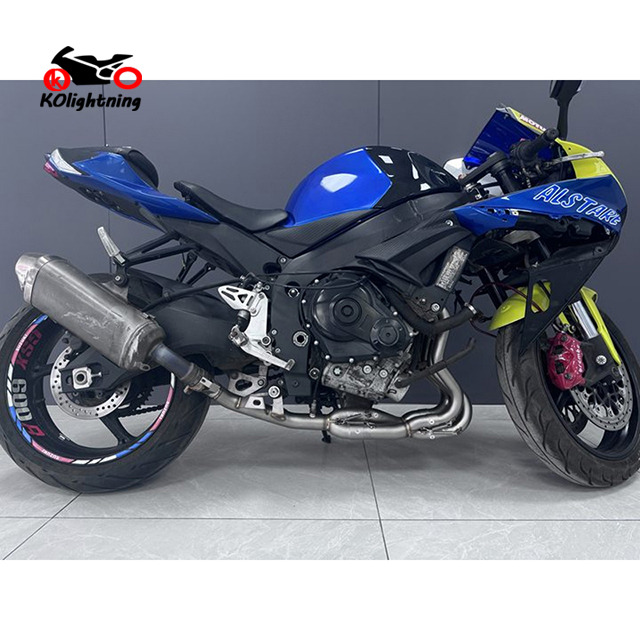
Riders constantly ask if swapping a factory muffler for an aftermarket pipe will destroy their engine. The short answer is no. A standard muffler swap on a modern, fuel-injected motorcycle will not cause catastrophic engine failure, provided the factory catalytic converter remains intact. You want improved aesthetics, significant weight reduction, and a deeper exhaust note. However, you hesitate due to fears of burnt valves or piston damage. Forums and social media are filled with conflicting information regarding backpressure, lean running conditions, and the absolute necessity of ECU tuning. We need to separate internet myths from thermodynamic realities. This guide establishes a clear framework to evaluate the actual mechanical impact of replacing a factory muffler. You will learn how exhaust gas velocity works, how modern fuel injection adapts to minor flow changes, and how to safely execute this popular modification without risking your engine's longevity.
Key Takeaways
A standard slip-on exhaust system, when installed on a modern fuel-injected motorcycle with the factory catalytic converter intact, is highly unlikely to cause engine damage.
Engine damage risks (specifically burnt exhaust valves from running excessively lean) primarily arise when a slip-on is combined with a high-flow air filter or a catalytic converter delete without corresponding ECU recalibration.
Modern closed-loop EFI systems can typically compensate for the minor changes in exhaust flow introduced by a basic muffler swap.
Evaluating the quality of the exhaust—avoiding poorly fitted knock-offs that cause exhaust leaks near the header—is critical for long-term engine health.
A localized or unengineered custom exhaust can negatively impact velocity, causing scavenging issues that mimic fueling problems.
The Physics of a Slip-on Exhaust System: What Actually Changes?
Backpressure vs. Exhaust Scavenging
Many riders believe four-stroke engines require backpressure to operate correctly and prevent damage. This is a persistent myth. Engines do not need backpressure. They actually require optimal exhaust gas velocity to pull spent gases from the cylinder. Engineers call this process exhaust scavenging. A proper Slip-on Exhaust System alters this velocity by reducing physical restriction at the very end of the exhaust tract. When the exhaust valve opens, a high-pressure pulse travels down the pipe. Following this pulse is a low-pressure wave. This low-pressure wave helps suck the remaining exhaust gases out of the combustion chamber. Changes at the muffler level have a minimal impact on this scavenging effect compared to altering the header pipe diameter or length. The factory headers dictate the primary scavenging characteristics.
To understand this better, look at the exhaust tract as a fluid dynamics problem. The engine acts as an air pump. The faster you can move air in and out, the more power you generate. However, if the pipe is too large, the gas velocity drops. If the velocity drops, the low-pressure wave weakens. This leaves burnt gases in the cylinder, diluting the next intake charge. A well-designed muffler maintains enough velocity to keep the scavenging effect strong while reducing the physical restriction that causes pumping losses.
The Torque Loss Paradox: Does a Loss of Low-End Power Equal Engine Damage?
Riders frequently report a slight loss of low-end torque after installing an aftermarket exhaust. They often rely on their "butt-dyno" to feel this change. Reducing restriction at the muffler can shift the engine's power band higher up the RPM range. This results in a slight drop in low-end scavenging efficiency. The engine breathes slightly better at high RPMs but loses a fraction of its low-RPM punch. You must understand the physics here. This shift in the torque curve is simply a performance characteristic. It is not a sign of mechanical engine degradation or internal wear. The engine is operating safely, just moving air differently at specific engine speeds.
When you look at a dyno chart before and after a muffler swap, you often see a dip in the curve between 3,000 and 5,000 RPM. This happens because the factory exhaust was tuned specifically to boost velocity at those lower engine speeds for street drivability. By removing that restriction, you trade low-end grunt for top-end over-rev. Your engine is not breaking; it is just breathing differently.
How Modern ECUs Handle Minor Flow Changes
You need to understand the difference between open-loop and closed-loop fueling systems. Older motorcycles or those running at wide-open throttle often use open-loop mapping. They rely on pre-programmed fuel tables without live feedback. Modern motorcycles utilize closed-loop systems for cruising and idle. The narrow-band O2 sensor sits in the factory exhaust header. It reads the air/fuel ratio (AFR) in real-time. The ECU uses this data to adjust short-term fuel trims. A safe upgrade requires the exhaust modification to keep the AFR within the ECU’s factory adjustment parameters. Because a basic muffler swap only slightly alters total flow, the factory ECU can easily add the minute amount of fuel required to maintain a safe AFR.
The O2 sensor generates a voltage based on the oxygen content in the exhaust stream. If the mixture is lean, the voltage drops. The ECU sees this drop and increases the injector pulse width, adding more fuel. This closed-loop operation usually functions up to about 40% throttle and 6,000 RPM. Beyond that, the system switches to open-loop. Fortunately, the factory open-loop maps are typically programmed slightly rich from the factory to protect the engine under heavy load, providing a safety buffer when you add a free-flowing muffler.
Can a Slip-on Exhaust Cause Direct Engine Damage? Evaluating the Risks
The "Running Lean" Concern: Heat and Valve Damage
A lean condition occurs when the engine receives too much air and not enough fuel. Fuel acts as a cooling agent inside the combustion chamber. Running lean increases combustion temperatures significantly. The worst-case scenario involves localized overheating. This extreme heat can lead to burnt exhaust valves or severe piston scoring. However, you must understand the threshold for this damage. A simple muffler swap rarely pushes the AFR past the danger point. The factory intake remains the primary bottleneck for air entering the engine. As long as the intake remains stock, the engine simply cannot ingest enough extra air to create a dangerously lean condition.
Mechanics look for specific signs of a dangerously lean condition. These include chalky white spark plug insulators, excessive bluing on the header pipes near the cylinder head, and a surging sensation at steady throttle. If you only changed the muffler and left the airbox alone, you will rarely see these symptoms. The engine's volumetric efficiency has not changed enough to cause a thermal meltdown.
Decel Pop: Annoyance or Danger Sign?
Deceleration popping sounds like backfiring on a closed throttle. Many riders panic when they hear this after an exhaust install. Decel pop is actually present from the factory on almost all modern motorcycles. Manufacturers use lean idle mapping to comply with strict emissions regulations. The heavy, baffled stock muffler simply masks the sound. When you install a free-flowing exhaust, you finally hear the combustion events occurring in the pipe. Decel pop itself is generally not damaging to the engine internals. However, excessive and violent backfiring can degrade fiberglass muffler packing over time.
To reduce decel pop without tuning, you can sometimes block the secondary air injection (PAIR) valve system. This system injects fresh air into the exhaust tract to burn off unburnt hydrocarbons. Blocking it stops the fresh oxygen from mixing with the hot exhaust gases, significantly reducing the popping sound on deceleration.
The Extreme Case: Slip-ons vs. Running Open Headers (Cold Air Reversion)
Some mechanics claim that any exhaust modification causes engine damage. They usually confuse a slip-on with running a completely open header. Running open headers introduces the phenomenon of cold air reversion. During valve overlap, both the intake and exhaust valves are slightly open. Without sufficient exhaust pipe length, cold ambient air can travel backward up the exhaust tract. This cold air hits the red-hot exhaust valves, potentially warping or cracking them. A proper slip-on provides sufficient pipe length and internal baffling to completely eliminate the risk of reversion.
The Impact of Removing the Catalytic Converter
You must differentiate between a true slip-on and a "cat-back" or mid-pipe system. A true slip-on only replaces the rear muffler. A mid-pipe system eliminates the factory catalytic converter. Removing the cat drastically alters exhaust flow and system backpressure. The catalytic converter is the most restrictive component in the entire exhaust system. Removing it pushes the AFR far beyond the ECU's ability to compensate. This significantly increases the risk of engine damage. You must install a custom tune if you remove the catalytic converter.
Evaluating Slip-on Exhaust Systems by Motorcycle Brand
Upgrading a CFMOTO Slip-on Exhaust: Tuning Requirements
Modern CFMOTO engines feature specific factory fueling characteristics. They are often mapped quite lean from the factory to meet stringent Euro 5 emissions standards. When adding a CFMOTO Slip-on Exhaust, you must evaluate the implementation realities. You need to verify whether the specific model's ECU has enough trim authority to handle the flow change without a piggyback tuner. Fortunately, the massive stock catalytic converter on CFMOTO models acts as the primary restriction point. Leaving the cat in place makes a muffler-only upgrade highly safe and usually requires no ECU intervention.
Installing a Kawasaki Slip-on Exhaust: Factory Tolerances
Kawasaki sport and naked bikes, such as the Ninja and Z series, possess robust factory engine tolerances. A Kawasaki Slip-on Exhaust is typically a straightforward plug-and-play modification. This holds true provided the heavy factory pre-muffler and catalytic converter box remain installed under the chassis. The factory ECU easily adapts to the new muffler. However, specific edge cases exist. High-revving Kawasaki engines used at continuous track speeds might require fueling adjustments to optimize top-end power and manage heat effectively.
Universal vs. Model-Specific Slip-on Exhaust Systems
You must contrast engineered, model-specific kits with cheap, universal fitment mufflers. Engineered systems account for the specific flow dynamics of your engine. Universal slip-ons often feature incorrect inlet diameters. They may have internal baffle volumes that do not match the engine's displacement. These mismatches can create extreme flow restrictions or excessive scavenging. This destabilizes the engine's AFR and can lead to poor throttle response or stalling.
Cheap Knock-offs vs. Reputable Brands: A Cost-to-Risk Analysis
Material Degradation and Baffle Failure
Reputable brands use aerospace-grade materials like titanium and high-carbon stainless steel. Counterfeit exhausts rely on cheap alloys and low-grade aluminum. The extreme heat and vibration of a motorcycle exhaust destroy cheap materials quickly. You face a severe risk of internal baffle collapse in cheap exhausts. When a poorly welded baffle breaks loose, it can block the exhaust exit. This causes sudden, severe exhaust restrictions and localized backpressure spikes. The resulting engine overheating can cause permanent internal damage.
Fitment Issues and Exhaust Leaks
Manufacturing tolerances dictate the success of your installation. Poor fitment at the mid-pipe junction inevitably causes exhaust leaks. An exhaust leak upstream of the O2 sensor is highly problematic. The leak introduces ambient oxygen into the exhaust stream. The O2 sensor reads this excess oxygen and tricks the ECU into reading a false lean condition. The ECU responds by dumping excess fuel into the engine. Running rich leads to heavy carbon buildup on the valves and rapid spark plug fouling.
Implementation Risks and Mitigation Strategies
When is an ECU Flash or Piggyback Tuner Mandatory?
You need a clear decision framework to determine when tuning is required. Use the following parameters to guide your modification path.
Modification Level
Tuning Requirement
Risk of Engine Damage (If Untuned)
Slip-on Muffler Only (Stock Cat & Intake)
No tune required (usually)
Very Low
Slip-on + High-flow Air Filter
Tune highly recommended
Moderate (Lean condition likely)
Slip-on + Cat Delete / Full System
Tune strictly mandatory
High (Severe lean condition, heat damage)
You must evaluate the pros and cons of ECU flashing versus installing a piggyback fuel controller. An ECU flash rewrites the factory parameters directly, offering seamless integration. A piggyback controller intercepts and modifies signals, allowing for easier removal if you return the bike to stock.
Proper Installation and Leak Testing
Technical installation steps mitigate major risks. Follow these procedures to ensure a safe fitment.
Remove the factory muffler carefully, retaining all original mounting hardware and rubber isolators.
Clean the mid-pipe connection point with a wire brush to remove old carbon deposits and gasket material.
Install a new exhaust gasket if the manufacturer specifies one for your model.
Apply a thin bead of high-temp copper silicone to the slip joint if no physical gasket is used.
Slide the new muffler onto the mid-pipe and loosely install the mounting bolts.
Align the exhaust system to ensure it does not contact the swingarm or rear brake caliper.
Tighten all clamps and bolts to the factory torque specifications.
Perform a cold-start leak test by spraying soapy water on the joints and watching for bubbles.
Conclusion
Browse model-specific slip-on exhausts designed for your exact chassis to ensure proper fitment.
Consult a local dyno tuner if you plan to add high-flow intake modifications later.
Verify all gasket and clamp requirements before beginning the installation process.
Perform a thorough cold-start leak test immediately after installation.
FAQ
Q: Do I need to tune my motorcycle after installing a slip-on exhaust?
A: No, you generally do not need a tune if you only install a slip-on muffler and leave the factory catalytic converter and stock air filter in place. The factory ECU can compensate for the minor change in exhaust flow.
Q: Will a slip-on exhaust void my motorcycle's factory warranty?
A: A slip-on exhaust usually does not void the entire warranty. Dealerships can only deny a warranty claim if they prove the aftermarket exhaust directly caused the specific component failure.
Q: Why does my motorcycle pop on deceleration after installing a slip-on?
A: Decel pop happens because unburnt fuel ignites in the hot exhaust pipe. Factory bikes do this too, but the heavy stock muffler muffles the sound. A free-flowing slip-on makes this normal combustion noise audible.
Q: Can an exhaust leak damage my motorcycle engine?
A: Yes, an exhaust leak near the O2 sensor can introduce outside air. This tricks the ECU into thinking the engine is running lean, causing it to dump excess fuel, which leads to carbon buildup and fouled spark plugs.
Q: What is the difference between a slip-on exhaust and a full exhaust system?
A: A slip-on only replaces the rear muffler section. A full system replaces everything from the engine cylinder head back, including the headers and catalytic converter, requiring a mandatory ECU tune.
Q: Will a slip-on exhaust make my motorcycle run lean?
A: A slip-on alone will slightly alter the air/fuel ratio, but rarely enough to cause a dangerously lean condition. The factory intake restricts airflow enough to keep the engine operating safely within factory limits.