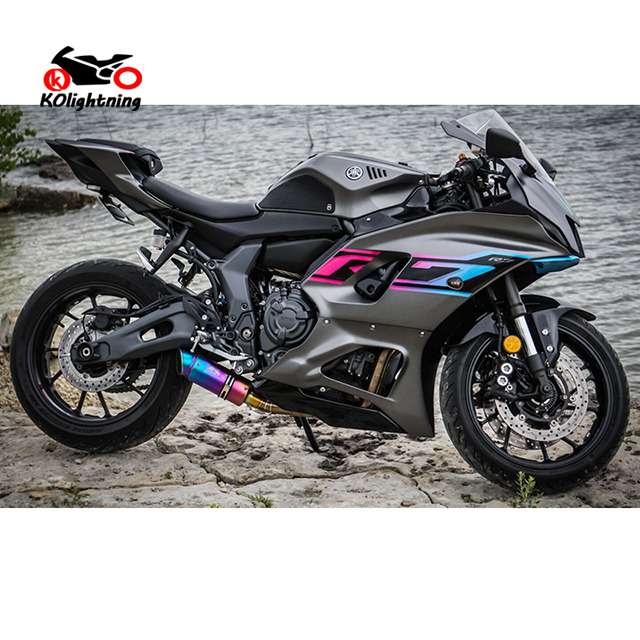
Upgrading your motorcycle exhaust is the most popular aftermarket modification for riders today. Modern factory motorcycles leave the showroom heavily restricted. Manufacturers must comply with incredibly strict global noise and emissions regulations. Because of this, stock exhaust setups often feature massive, heavy mufflers and restrictive catalytic converters. However, modifying this area is also the easiest place to waste money. You might quickly compromise engine reliability if your chosen parts fail to match your specific riding goals.
Riders upgrade these components for several distinct reasons. Some want to reduce overall vehicle weight to improve handling. Others prefer to change the exhaust note from a quiet hum to an aggressive growl. Many riders simply want to chase peak horsepower. The right choice depends entirely on your primary riding environment. Street commuting requires completely different solutions than aggressive weekend track days. You must also consider your willingness to modify the engine's fueling map. This guide provides an evidence-based framework to help you choose the correct setup. We evaluate slip-ons against full headers in deep detail. You will learn about material properties and thermal management. We also expose the hidden realities of engine tuning. This practical knowledge ensures you make a confident, compliant, and highly effective purchase.
Key Takeaways
Slip-ons vs. Full Systems: Slip-ons deliver sound and aesthetic upgrades with zero tuning required; a full exhaust system is strictly for maximum performance and requires aftermarket ECU tuning.
Material Cost-to-Weight: Titanium offers the best heat dissipation and weight savings but carries a premium price; stainless steel provides the best long-term durability for daily street riding.
The Tuning Mandate: Installing a full system without adjusting the air-fuel ratio (AFR) can cause the engine to run dangerously lean, risking long-term valve damage.
Compliance Reality: Removing catalytic converters for a track-oriented system often violates local emissions and noise ordinances (e.g., Euro 5, EPA, CARB), making baffle compatibility crucial for street bikes.
The Core Decision: Slip-On vs. A Full Exhaust System
Your primary choice dictates your overall investment. It determines the installation complexity you will face in the garage. It also establishes your absolute performance ceiling. You must examine how each setup functions mechanically before spending any money.
Slip-On Exhausts (Muffler/Silencer Only)
A slip-on setup replaces only the factory muffler. You retain the stock headers bolted to the engine block. You also keep the factory catalytic converter completely intact. This mechanism offers several distinct outcomes for the rider. You achieve significant weight reduction at the rear of the motorcycle. Dropping a bulky steel muffler improves the overall power-to-weight ratio. The exhaust note deepens significantly. Your motorcycle gains a much cleaner, streamlined aesthetic.
Implementation remains incredibly straightforward. It is a true bolt-on installation process. You can usually complete the job in your garage using basic hand tools in under an hour. You rarely need ECU flashing. You almost never need fueling modifications because the factory catalytic converter maintains backpressure. This option is best for street riders. It perfectly suits anyone prioritizing sound and looks on a strict budget. Be aware that on some modern motorcycles, the factory exhaust is a single welded unit. You might have to physically cut the mid-pipe to install a slip-on. Always verify your specific model first.
Full Exhaust System
A Full Exhaust System replaces everything from the engine block exhaust ports backward. You remove the factory headers, the mid-pipe, and the muffler. This approach eliminates the heavy catalytic converter entirely. It optimizes exhaust gas velocity from the cylinder head straight to the tailpipe. You typically see measurable horsepower and torque gains. Riders often experience 5-10% increases when paired with proper tuning.
However, implementation involves high complexity. You must remove the body fairings. You often need to unbolt and shift the radiator forward to access the header bolts. You must always replace the copper exhaust gaskets at the cylinder head. This prevents dangerous exhaust leaks. This path is best for dedicated track day enthusiasts. Competitive racers and performance purists benefit most from this extensive, high-flow upgrade.
Exhaust Configuration Matrix
Feature
Slip-On Setup
Full Header Setup
Installation Time
30 - 60 minutes
3 - 5 hours
ECU Tuning Required
No (in most cases)
Yes (Mandatory)
Weight Savings
Moderate (3-8 lbs)
Maximum (10-20 lbs)
Horsepower Gain
Negligible (1-2 HP)
Significant (5-10% gain)
Emissions Status
Usually Compliant
Closed Course Only
Evaluating Materials: Weight, Heat, and Durability
Exhaust materials dictate the price tier directly. They also govern heat management capabilities. You should avoid overpaying for expensive track-grade materials. Do not buy exotic metals if your bike serves strictly as a daily commuter. We analyze the three primary materials below to help you match the metal to your mission.
Stainless Steel
Stainless steel is the industry standard for aftermarket exhausts. It offers the best balance of strength and affordability.
Pros: It is highly durable and incredibly cost-effective. The metal resists rust exceptionally well in wet conditions. It will not crack under normal street vibration. High-grade 304 stainless steel handles daily commuting abuse perfectly.
Cons: It remains the heaviest aftermarket option available. While lighter than OEM systems, it cannot match the weight savings of exotic metals.
Titanium
Titanium represents the absolute pinnacle of exhaust manufacturing. You see this material used heavily in MotoGP and World Superbike racing.
Pros: It is extremely lightweight. You can save up to 40% more weight compared to stainless steel. The metal dissipates heat rapidly. It cools down just minutes after you shut off the engine. It develops a highly desirable, distinctive blue and purple patina after repeated heat cycling.
Cons: It carries a very high premium cost. Titanium can also be more brittle than steel under heavy impact. A driveway drop might dent or crack it permanently.
Carbon Fiber
Carbon fiber offers a unique blend of aesthetics and thermal properties. Manufacturers use it primarily for the muffler sleeve.
Pros: It delivers a premium, high-performance aesthetic. The material maintains the lowest surface temperature among all options. It will not easily burn your soft luggage or a passenger's legs.
Cons: The internal fiberglass packing requires repacking over time. Prolonged exposure to excessive exhaust gas temperatures degrades the material. Running the engine lean without a tune can cause the resin to discolor, blister, or crack entirely.
The Hidden Cost of Performance: ECU Tuning and Fueling
We must address a prevalent industry myth immediately. A new pipe does not automatically add horsepower. Freeing up exhaust flow without adding fuel creates a dangerous lean condition. An engine needs a specific ratio of air to fuel. When you add more air volume through better scavenging, you must supply more fuel. The factory oxygen sensors cannot compensate for massive airflow changes at wide-open throttle.
Implementation Risks:
Altered Backpressure: Installing a full setup drastically alters internal exhaust backpressure. This confuses the factory engine maps.
Lean Operations: High flow without extra fuel means the engine runs lean.
Heat Damage: Running lean increases engine operating temperatures significantly. This leads directly to potential exhaust valve degradation over time.
Poor Drivability: You might experience severe deceleration popping, jerky throttle response, and low-RPM hesitation.
Solution Approaches:
Piggyback Controllers: Devices like the Power Commander intercept the stock ECU signal. They add fuel before the signal reaches the injectors. They are excellent for localized tuning. You can adjust maps using a laptop or download pre-made maps from the manufacturer.
ECU Flashing: This process reprograms the factory brain directly. It is the most comprehensive method available. Flashing allows you to adjust throttle mapping smoothly. You can reduce aggressive engine braking. You can even adjust cooling fan activation temperatures to keep the bike running cooler in traffic.
Bottom Line: You must budget an additional $300 to $600 for tuning. Keep this financial reality in mind when shortlisting your desired parts. Do not install full headers if you refuse to tune the motorcycle.
Street Compliance vs. Track Requirements
You must balance the desire for a raw exhaust note against operational realities. Noise and emissions laws dictate what you can legally run on public roads. Operating your motorcycle safely means understanding local ordinances.
Emissions and Catalytic Converters: Full setups eliminate the catalytic converter entirely. This action immediately flags the bike as strictly for "Closed Course Competition Use Only." Highly regulated areas enforce strict emissions laws. California's CARB regulations and Europe's Euro 4/5 standards mandate factory emissions equipment. Removing these parts often violates local ordinances. It can lead to steep fines or failed annual vehicle inspections.
Decibel (dB) Limits: Loud pipes draw unwanted attention. Track days often have strict decibel limits. For example, Laguna Seca strictly enforces a 103dB limit for most track days. If you blow past the sound meter too loudly, officials will remove you from the track. Street ordinances vary widely by municipality. Law enforcement often uses the SAE J2825 standard for roadside sound testing. Annoying your neighbors or local police rarely ends well for riders.
Feature Evaluation: You should look for systems featuring removable "dB killers" or baffles. A baffle restricts exhaust flow slightly at the tip. It significantly reduces the decibel output. This feature allows the system to scale easily. You can insert the baffle for compliant, quiet street riding. You can remove it in seconds with a single bolt for unrestricted track use.
Shortlisting Framework: Matching the Exhaust to Your Ride
Matching the right parts to your specific motorcycle requires an honest assessment. You must evaluate your primary riding style.
Decision Matrix:
Scenario A (Daily Commuter / Weekend Canyons): You should prioritize a stainless steel slip-on. You must retain the stock catalytic converter. This approach yields high return on your investment. You experience zero tuning hassle. The bike remains perfectly reliable for daily transportation. It stays legal and quiet enough for early morning commutes.
Scenario B (Dedicated Track / Aggressive Sport): You should prioritize a full titanium setup. You must pair this with a high-flow air filter. You need a custom dyno tune to optimize the air-fuel ratio. This route carries a high cost. However, it delivers maximum performance, massive weight savings, and superior throttle response.
Choosing the perfect Motorcycle Exhaust System requires careful planning. Clearances matter immensely. You must ensure the chosen parts do not interfere with other accessories. Verify the mid-pipe clears aftermarket adjustable rearsets. Check clearance around center stands, especially on adventure bikes. Ensure the muffler does not melt your side panniers. This step is especially critical on sport-touring setups where hard luggage sits directly above the tailpipe.
Conclusion
Upgrading your motorcycle requires balancing your budget against legal compliance and tuning commitments. We hope this guide helps clarify your next steps. Slip-ons remain the safest, most cost-effective route for improving sound and style. Conversely, full headers represent a holistic engine upgrade. They require proper fueling management to operate safely and effectively.
Verify your budget includes professional tuning costs if you plan to remove the catalytic converter.
Check local noise ordinances to determine if you strictly need removable baffles.
Inspect clearance around luggage, center stands, and footpegs before purchasing any components.
Confirm your exact make, model, and year against manufacturer fitment guides before finalizing any purchase.
FAQ
Q: Will a slip-on exhaust system increase my motorcycle's horsepower?
A: Negligibly. A slip-on primarily reduces weight and alters sound. Any horsepower gain is typically 1-2 HP, which is imperceptible on the street.
Q: Do I need to tune my motorcycle after installing a full exhaust system?
A: Yes. A full system drastically increases exhaust flow. Without an ECU flash or fuel controller to match the increased airflow with more fuel, your engine will run lean, causing excessive heat and potential damage.
Q: Does installing an aftermarket exhaust void my motorcycle warranty?
A: A slip-on rarely voids a factory warranty as it doesn't alter emissions equipment. However, installing a full system that removes the catalytic converter and requires an ECU flash will almost certainly void powertrain warranty claims.
Q: What is exhaust repacking and how often is it needed?
A: Mufflers use fiberglass or synthetic packing material to absorb sound. Over time, high heat burns this out, making the exhaust significantly louder and harsher. Most manufacturers recommend repacking every 10,000 to 15,000 miles, or sooner for track use.