Upgrading your factory exhaust is a major decision for any rider. You must balance high upfront expenses against the actual gains in acoustics, weight reduction, and visual appeal. Many riders fall into the trap of believing louder automatically equals faster. In reality, choosing the wrong components can actively degrade engine performance. It can also cause severe highway drone fatigue on long trips and instantly void your factory warranty.
This article provides an objective, evidence-based framework to help you evaluate aftermarket parts. You will learn how to match specific materials, configurations, and tuning requirements to your exact riding style. You will discover the mechanical realities behind pipe diameters, metal alloys, and backpressure changes. Our goal is to help you select a Motorcycle Exhaust System that fits your budget perfectly while keeping your bike reliable and compliant.
We break down the technical differences between simple muffler swaps and full mechanical overhauls. Read on to discover how heat cycles affect different materials. We also outline the exact tuning steps required to protect your engine from harmful lean conditions.
Key Takeaways
Slip-ons vs. Full Systems: Slip-on motorcycle mufflers offer cost-effective sound and aesthetic upgrades, while full systems are required for measurable horsepower gains but demand expensive ECU tuning.
Material Trade-offs: Stainless steel wins on budget and durability, titanium maximizes weight reduction but costs a premium, and carbon fiber requires heat management awareness.
Acoustic Compliance: Modifying exhaust alters backpressure and decibel output; buyers must factor in local emissions laws and the physical fatigue of highway drone.
Hidden Costs: A true performance upgrade requires factoring in $300–$800 for fuel mapping, dyno tuning, and high-flow air filters.
Slip-On Motorcycle Mufflers vs. Full Systems: Defining Your Baseline
Riders often overspend on complex upgrades. They frequently buy a complete setup when they only need a visual or auditory boost. Defining your actual mechanical needs prevents costly mistakes. You must understand the functional boundary between the tailpipe and the engine headers. This baseline dictates your installation time, warranty risks, and tuning requirements.
The Slip-On Approach (Tailpipe/Muffler Only)
A standard Motorcycle Muffler replacement changes your bike visually and acoustically. You simply remove the bulky factory canister. You then clamp the new aftermarket piece onto the existing mid-pipe. This straightforward modification offers several distinct advantages and a few notable limits.
Altered Sound and Weight: You drop a few pounds instantly. The tone becomes deeper and more aggressive.
Easy DIY Installation: Most riders can complete the swap in under an hour using basic hand tools.
Emissions Compliance: You retain the factory catalytic converter. This keeps the bike road-legal in most jurisdictions.
No Tuning Required: The modification rarely requires ECU flashing. The factory sensors easily compensate for the minor airflow change.
Performance Limits: You will experience zero to negligible horsepower gains. The primary restriction remains inside the factory headers and catalytic converter.
The Full Exhaust Overhaul (Headers to Tailpipe)
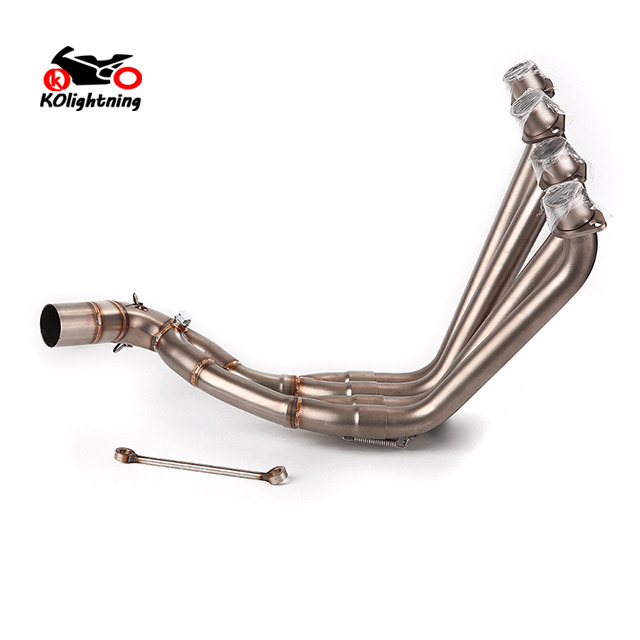
A full layout replaces everything from the engine exhaust ports to the rear bumper. Manufacturers design these to optimize exhaust gas flow and eliminate strict factory bottlenecks. This route is mandatory for serious track riders and performance builders.
Maximum Weight Reduction: Replacing heavy cast-iron headers sheds massive weight. You instantly improve the power-to-weight ratio.
Optimized Flow: Wider pipe diameters allow spent gases to exit faster. This scavenging effect draws fresh air into the combustion chamber more efficiently.
Horsepower Gains: You can expect a potential 5-15% horsepower increase. This requires a high-flow air filter and proper fuel mapping.
Aggressive Acoustics: Removing the catalytic converter dramatically increases decibel levels. The sound becomes raw and track-oriented.
High Costs and Complexity: You face a high initial purchase price. The installation requires removing fairings, radiators, and oxygen sensors.
Mandatory Tuning: You must remap the fuel delivery. Running a full free-flowing setup without adding fuel causes dangerous lean conditions.
Evaluating Exhaust Materials: The Weight-to-Durability Trade-off
Manufacturers build aftermarket parts from three primary materials. Each metal or composite behaves differently under extreme heat cycles. Your riding environment should dictate your material choice. You must weigh upfront costs against long-term durability. We evaluate the pragmatic standard, the premium option, and the aesthetic lightweight choice below.
Stainless Steel (The Pragmatic Standard)
High-grade stainless steel dominates the street and adventure markets. It contains chromium and nickel. These elements create a highly durable, rust-resistant barrier. Daily commuters and ADV riders benefit greatly from this robust construction.
Stainless steel withstands physical impacts exceptionally well. It easily shrugs off gravel strikes and minor tip-overs. It is the heaviest aftermarket option available. However, it remains significantly lighter than stock factory components. Stainless steel is the most cost-effective material. It provides excellent longevity for all-weather riders.
Titanium (The Track-Focused Premium)
Titanium appeals directly to track-day enthusiasts and canyon carvers. Engineers prize it for its incredible strength-to-weight ratio. A full titanium layout can be up to 40% lighter than standard steel configurations. It also dissipates heat rapidly. The pipe surface cools down quickly once the engine shuts off.
This premium performance carries a premium price tag. Titanium demands complex welding processes in oxygen-free environments. It is also more brittle than steel. The thin walls are more susceptible to denting from physical impacts. Many riders love it for the beautiful blue and purple hues it develops after repeated heat cycling.
Carbon Fiber (The Aesthetic Lightweight)
Carbon fiber offers an ultra-lightweight, high-tech aesthetic. Builders weave carbon strands and bind them using specialized resins. It stays remarkably cool to the touch. This makes it ideal for sportbikes where heat must be managed away from the rider's legs and the canister.
Durability issues arise under extreme, prolonged heat. Carbon fiber remains vulnerable to structural failure over time. Large displacement V-twins produce massive, thumping exhaust pulses. If the internal packing degrades, the extreme heat directly attacks the resin. The canister can eventually delaminate, crack, or shatter. It requires strict heat management awareness and regular repacking.
Review the comparison below to guide your material selection process.
Material Type
Weight Profile
Durability & Heat Resistance
Ideal Rider Application
Stainless Steel
Moderately Heavy
High impact resistance; highly resistant to rust.
Daily Commuters, ADV Riders, Budget Upgrades
Titanium
Ultra-Lightweight
Excellent heat dissipation; prone to impact denting.
Track Enthusiasts, Sportbikes, Premium Builds
Carbon Fiber
Ultra-Lightweight
Remains cool; vulnerable to extreme internal heat.
Sportbikes, Street Fighters, Visual Upgrades
Engineering the Right Sound (Without Sacrificing Compliance)
Acoustics heavily influence the aftermarket buying experience. However, chasing maximum volume often ruins the riding experience. You must understand the physics of sound waves and the realities of emissions laws. Modifying your exhaust alters backpressure and decibel output simultaneously.
Understanding Volume vs. Tone
Many riders confuse decibel (dB) levels with acoustic pitch. Decibels measure pure volume or sound pressure. Pitch describes the frequency or tone. You might desire a deep, throaty rumble. You do not necessarily need higher decibels to achieve it. A well-engineered silencer changes the internal baffling to enhance low frequencies. Poorly designed pipes simply remove all restrictions. This creates a high-pitched, raspy noise that annoys neighbors and attracts unwanted police attention.
The "Drone" Factor and Rider Fatigue
Continuous high-decibel exposure severely impacts rider fatigue. We call this phenomenon "highway drone." When an engine holds a steady RPM at highway speeds, a loud pipe produces a constant, low-frequency hum. This acoustic resonance penetrates helmets and earplugs. It vibrates through the chassis into your bones. Over a multi-day touring trip, highway drone causes headaches, exhaustion, and hearing damage. You must consider your typical ride duration before buying the loudest pipe available.
Baffles and dB Killers
Smart buyers look for systems featuring removable inserts. We call these baffles or dB killers. They restrict gas flow slightly and bounce sound waves back into the canister. You can leave them installed for street-legal, neighbor-friendly volume during your morning commute. You can easily remove them for aggressive track-day sound on the weekend. This flexibility prevents buyer's remorse.
Regulatory Compliance and Legal Realities
You cannot ignore emissions standards. Agencies enforce strict EPA, DOT, and Euro5 regulations globally. Modern bikes feature catalytic converters loaded with precious metals. These converters scrub harmful unburnt hydrocarbons from the exhaust stream. Modifying headers and removing the catalytic converter alters the chemical output. This instantly shifts your bike into "track-use only" legal territory. You risk heavy fines and failed annual inspections if you operate decatted motorcycles on public roads.
Implementation Realities: Tuning, ECU Flashing, and Warranty Risks
Bolt-on hardware represents only half of a performance upgrade. The internal combustion engine requires a precise mixture of air and fuel. Changing how gases exit the engine directly changes how air enters it. You must manage the digital side of the engine to protect your hardware investment.
The Lean Condition Risk
Improving exhaust flow allows the engine to breathe easier. If you do not add more fuel to match the increased air, the engine runs lean. A lean air-fuel ratio creates hotter combustion temperatures. This excessive heat transfers directly into the cylinder head. Over time, it can warp or burn the exhaust valves. It also causes the engine to run rough, backfire excessively on deceleration, and lose torque in the mid-range.
Fuel Management Solutions
You have two primary methods to correct a lean condition and restore factory smoothness. Both methods alter the injector pulse width to deliver more fuel.
Piggyback Controllers: Devices like the Power Commander intercept signals from the factory ECU. They alter the fuel signal before it reaches the injectors. You install a physical module under the seat. You can download specific fuel maps created for your exact pipe and air filter combination.
Direct ECU Flashing: This involves accessing the brain of the motorcycle directly. A professional tuner connects a laptop to the diagnostic port. They rewrite the base fuel and ignition tables. Flashing removes factory restrictions, alters throttle-by-wire mapping, and provides the smoothest power delivery possible.
Warranty Implications
Dealerships scrutinize aftermarket modifications when you submit a warranty claim. Installing a slip-on muffler generally does not void warranties. However, objective warnings apply to deeper modifications. If you modify the headers, remove the catalytic converters, or flash the ECU, you assume financial risk. Manufacturers will almost certainly void the powertrain portion of your warranty. If an engine failure occurs, they will blame the altered fuel maps and missing emissions equipment.
Shortlisting Your Ideal Motorcycle Exhaust System
You now understand the mechanical, acoustic, and digital variables. You can confidently narrow down your choices. We divide riders into three distinct personas. Align your purchase with your daily reality rather than an idealized racing fantasy.
Evaluation Framework by Rider Persona
Use the chart below to match your riding style with the correct hardware configuration. We recommend specific materials and tuning strategies for each group.
Slip-on muffler, stainless steel or carbon fiber. Retain the catalytic converter.
Factory ECU remains stock. No tuning required.
The Canyon Carver / Track Enthusiast
Maximum weight reduction, peak horsepower, aggressive tone.
Full system, titanium construction. Remove emissions equipment.
Custom dyno tune or ECU flash mandatory. Add high-flow air filter.
The Touring / ADV Rider
Durability, heat management, eliminating drone.
Slip-on or tough full system, high-grade stainless steel. Retain exhaust baffles.
Piggyback controller if headers are changed to smooth throttle response.
Brand Authority and Trust Signals
The market is flooded with cheap, unbranded alternatives. White-label pipes often lack structural integrity. They feature poor welds, misaligned mounting brackets, and cheap internal packing that blows out after a few hundred miles. We strongly advise shortlisting established manufacturers. Companies with dedicated R&D departments ensure precise fitment and predictable sound profiles. Brands like Akrapovič, Yoshimura, and LeoVince test their designs on dynamometers. They provide exact fuel mapping recommendations for their products. Investing in reputable engineering guarantees a seamless installation and long-term reliability.
Conclusion
Finding the optimal pipe requires honest self-assessment. You must balance your available budget with your tolerance for required maintenance, tuning costs, and legal compliance. A simple rear-section swap satisfies most street riders perfectly. Conversely, chasing podium finishes demands a full titanium layout and professional dyno tuning.
Keep these concise takeaways and action steps in mind as you move forward:
Prioritize material durability based on your riding environment, favoring stainless steel for street use and titanium for the track.
Acknowledge the physical toll of highway drone and prioritize setups featuring removable dB killers.
Never install a full header system without budgeting for proper fuel management and ECU tuning.
Review local noise ordinances and emissions laws to avoid costly fines and failed inspections.
Consult a certified local tuner before committing to a full system to discuss mapping availability for your specific make and model.
FAQ
Q: Do I need to tune my motorcycle if I only install a slip-on muffler?
A: Usually, no. Modern factory ECUs can adjust to the minor airflow changes of a slip-on. The factory oxygen sensors read the exhaust gases and make small fueling corrections automatically. However, a tune is always recommended if you remove the catalytic converter.
Q: How much weight does an aftermarket exhaust actually save?
A: Slip-ons typically save 3-7 lbs by replacing bulky factory canisters. Full titanium systems can shed 10-15 lbs compared to heavy factory exhaust configurations. Removing cast-iron headers and the catalytic converter provides the most dramatic weight reduction.
Q: Will an aftermarket exhaust void my motorcycle's warranty?
A: Slip-ons generally do not void warranties. They leave emissions equipment intact. Full systems that alter emissions equipment or require ECU modifications often void the powertrain portion of the manufacturer's warranty. Dealerships can deny engine claims if modifications cause lean conditions.
Q: What is the most durable exhaust material for adventure motorcycles?
A: High-grade stainless steel is the best choice. It resists corrosion effectively in wet environments. It withstands physical rock strikes much better than brittle carbon fiber. It is also significantly easier and cheaper to repair than titanium if you crash off-road.