Upgrading a motorcycle exhaust is usually the first major modification riders tackle when customizing their machines. The appeal is obvious right out of the gate. You get an aggressive exhaust note, sleek aesthetics, and the promise of unlocked horsepower. Evaluating this kind of hardware upgrade requires looking past the marketing hype and understanding the mechanical realities of modern motorcycle engines. Street riders frequently invest heavily in track-focused hardware without fully understanding the compounding requirements. You have to account for fueling adjustments, potential losses in low-end torque, and strict emissions compliance issues that come with removing factory components.
This guide strips away the hyperbole to provide a realistic, evidence-based framework for deciding if a complete exhaust upgrade delivers a measurable return on investment for daily and spirited street riding. We will examine the technical realities, implementation requirements, and performance trade-offs. The goal is to help you make an informed decision based on actual wrenching experience and dyno-proven results rather than forum speculation.
Tuning is Non-Negotiable: Installing a full exhaust system without an ECU flash or fuel controller risks running the engine dangerously lean, negating any performance benefits.
Usable Power vs. Peak Power: While full systems increase peak horsepower at the redline, street riders may actually experience a dip in the low-to-mid-range torque where 90% of street riding occurs.
Weight Reduction is the Primary Benefit: The most immediate and verifiable performance gain for street riders comes from shedding 10–15 pounds of factory catalytic converters and steel piping, improving handling and braking.
What Constitutes a True Full Exhaust System?
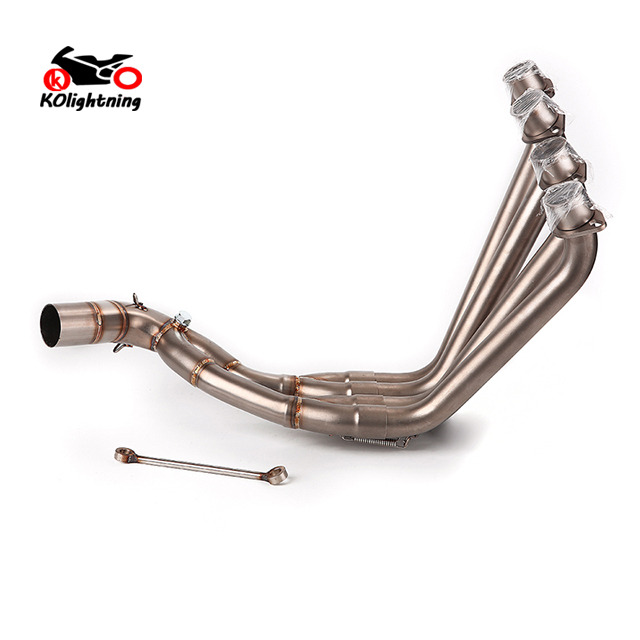
A complete exhaust setup replaces everything from the engine block exhaust ports all the way back to the tailpipe. This architecture includes the headers, the mid-pipe, and the muffler or silencer. The mid-pipe typically eliminates the heavy factory catalytic converter and any pre-muffler chambers. The primary mechanical goal is to optimize exhaust gas scavenging and reduce backpressure across the entire system. Factory systems are designed to meet strict noise and emissions regulations, which often results in heavy, restrictive plumbing. An aftermarket Full Exhaust System uses larger diameter tubing, smoother bends, and lighter materials to evacuate exhaust gases from the combustion chamber as efficiently as possible.
Slip-On vs. Full System
Understanding the structural and functional differences between these two options dictates your entire upgrade path. Slip-ons primarily alter sound and aesthetics by replacing only the final silencer. They leave the factory headers, exhaust valves, and catalytic converters completely intact. Because the restrictive factory components remain, slip-ons rarely require extensive engine tuning. In contrast, full systems alter the exhaust dynamics from the cylinder head backward. When transitioning to a manifold-back configuration, you discard heavy factory components and gain a streamlined, high-flow path. This drastic change in airflow is exactly why fuel mapping adjustments become mandatory.
Feature
Slip-On Exhaust
Full Exhaust System
Components Replaced
Muffler/Silencer only
Headers, Mid-pipe, Muffler
Catalytic Converter
Retained (usually)
Removed
Weight Savings
Minimal (2-5 lbs)
Significant (10-15+ lbs)
Tuning Required
Rarely
Mandatory
Performance Gain
Negligible
Noticeable top-end power
The Upgrade Path
Moving from a stock setup to a complete aftermarket system involves several mechanical steps. You are not just unbolting a muffler; you are tearing down the lower half of the motorcycle.
Remove the lower fairings and belly pan to access the header bolts at the engine block.
Disconnect the factory oxygen (O2) sensors from the wiring harness.
Unbolt the exhaust servo cables if the motorcycle is equipped with a factory EXUP valve.
Remove the heavy factory header and catalytic converter assembly as one unit.
Install new copper crush gaskets at the exhaust ports to prevent leaks.
Mount the new aftermarket headers loosely, followed by the mid-pipe and muffler, before torquing everything to spec.
Reinstall the O2 sensors or install bypass plugs depending on your tuning strategy.
Material Realities & Aesthetic Aging
Exhaust materials dictate durability, heat dissipation, and overall weight. Stainless steel offers excellent durability and resists cracking under heavy vibration. Over time, stainless steel develops a distinct straw-colored or golden heat tint. Titanium is significantly lighter and dissipates heat rapidly. It is famous in the motorcycle world for turning a vibrant blue and purple when exposed to high exhaust gas temperatures. Carbon fiber is primarily used for muffler sleeves and end caps to save weight and keep the exterior cool to the touch. However, carbon fiber requires careful maintenance and periodic repacking of the internal fiberglass to prevent the resin from degrading and cracking under extreme heat.
Evaluating the Performance ROI for Street Riders
Peak Horsepower vs. Usable Street Torque
Dyno charts provided by manufacturers often highlight wide-open throttle performance at high RPMs. They showcase impressive peak horsepower gains right at the redline. However, real-world street riding relies heavily on part-throttle inputs and mid-range RPMs. You spend most of your time navigating traffic, rolling on the throttle out of corners, and passing on the highway. The physics of exhaust gas velocity dictate that larger diameter headers, which are designed for top-end speed and maximum flow, might actually sacrifice low-end grunt. A pipe that is too large reduces the velocity of the exhaust pulses at lower RPMs, which hurts the scavenging effect that pulls fresh air and fuel into the cylinder. This means your bike might actually feel slower off the line despite making more power at 10,000 RPM.
Weight Reduction: The Most Noticeable Metric
The most tangible and immediate benefit for street riders is weight reduction. Factory exhaust systems are incredibly heavy due to the dense metals used in catalytic converters and thick steel tubing required for noise suppression. Removing a bulky factory system and replacing it with thin-wall stainless or titanium can easily save 10 to 15 pounds. Reducing this unsprung and high-mounted weight lowers the motorcycle's overall center of gravity. This translates directly to sharper turn-in response when attacking corners. The bike will transition from side to side with less effort, suspension behavior improves because there is less mass to control, and braking distances decrease slightly.
Throttle Response and Engine Mapping Realities
Modern motorcycles often suffer from a "snatchy" or abrupt throttle response right off idle. This is largely due to the extremely lean factory fueling required to pass strict emissions testing. When you roll off the throttle, the factory ECU often cuts fuel entirely, and when you roll back on, the sudden reintroduction of fuel causes a jerk in the driveline. A properly tuned aftermarket exhaust setup allows you to smooth out these restrictions. By optimizing the air/fuel ratio and disabling the aggressive factory fuel-cut parameters, riders experience much more predictable power delivery. The connection between the throttle grip and the rear tire becomes seamless, vastly improving rideability in tight, technical sections of road.
The Hidden Implementation Requirements
Why an ECU Flash or Piggyback Tuner is Mandatory
Running a modern, lean-burn factory engine with a high-flow exhaust without adjusting the fuel map is mechanically dangerous. The engine is already starved for fuel from the factory. When you remove the restrictive catalytic converter, the engine pumps more air. More air with the same amount of fuel creates a dangerously lean condition. This leads to excessive exhaust gas temperatures, which can warp or burn exhaust valves over time. It also causes severe deceleration popping and backfiring. You must correct the air/fuel ratio. Solutions include piggyback modules like a Power Commander, which intercepts and modifies the signal to the fuel injectors, or direct ECU flashing, which rewrites the factory computer. A proper ECU flash goes beyond just fueling; it modifies engine braking characteristics, adjusts ignition timing, and stabilizes cold-start idle behaviors.
Dyno Tuning vs. Off-the-Shelf Maps
Downloadable "canned" maps provided by exhaust manufacturers or tuning companies offer a convenient and functional baseline. You download the file, load it into your tuning device, and ride. However, these maps are built on a test bike in a specific climate. They cannot account for the specific volumetric efficiency of your individual engine, your local atmospheric conditions, or the exact altitude where you ride. A custom dyno tune involves putting your specific motorcycle on a dynamometer and measuring the exact air/fuel ratio at every RPM and throttle position. The dyno operator makes precision adjustments tailored exactly to your machine. This ensures maximum performance, eliminates flat spots in the powerband, and guarantees engine safety under heavy loads.
Brand-Specific Considerations and Engine Architectures
Upgrading a Yamaha Full Exhaust System
Tuning Yamaha's popular CP2 and CP3 engines, found in the MT-07, MT-09, and XSR900, requires specific attention to detail. These crossplane-concept engines respond uniquely to backpressure changes. The CP3, in particular, has a very aggressive factory fuel-cut deceleration mapping that makes the throttle feel jerky. Upgrading to a Yamaha Full Exhaust System often exacerbates this jerkiness if not tuned correctly. Proper O2 sensor placement on the aftermarket headers is critical. Many tuners recommend disabling the factory closed-loop O2 sensor system entirely and relying on a custom open-loop fuel map to retain low-end torque and ensure smooth power delivery across the rev range. You also need to install block-off plates on the PAIR valve system to stop fresh air from being injected into the exhaust, which causes massive backfiring on deceleration with an open pipe.
Upgrading a Honda Full Exhaust System
Honda's engine architectures, particularly the high-revving inline-four engines in the CBR series, present different exhaust dynamics compared to parallel twins. Installing a Honda Full Exhaust System often involves dealing with factory exhaust valves located in the mid-pipe. These valves are controlled by a servo motor and are designed to improve low-end torque and reduce noise at lower RPMs. Removing the factory exhaust means removing these valves. If you simply unplug the servo motor, the Honda ECU will immediately throw a Check Engine Light (MIL) and may put the bike into a limp mode. You must install a small electronic servo eliminator plug into the wiring harness to trick the ECU into thinking the valve is still functioning. Unique sensor parameters must also be addressed during the ECU flashing process to maintain optimal performance and keep the dashboard free of error codes.
Implementation Risks and Street-Riding Drawbacks
Noise Compliance, Emissions, and Legalities
Removing catalytic converters and installing high-flow mufflers significantly increases decibel levels. There is no getting around the noise. Many full systems are explicitly designated as "Track Use Only" by the manufacturer and lack street-legal homologation. Depending on your local jurisdiction, riding without a catalytic converter or exceeding decibel limits can result in heavy fines or failed vehicle inspections. Beyond legal compliance, you must consider the physical fatigue factor. A loud exhaust sounds great for the first twenty minutes, but persistent exhaust drone at highway speeds can severely impact rider endurance. The constant acoustic bombardment causes headaches and hearing damage during multi-hour street rides, making earplugs an absolute necessity.
Impact on Factory Riding Modes and Electronics
A common concern is whether altering the exhaust and flashing the ECU will ruin the motorcycle's factory electronics. Generally, a proper tune does not eliminate factory riding modes like Rain, Road, or Sport. However, the way these modes feel will change because the underlying fuel maps and throttle-by-wire parameters are modified. Modern IMU-based electronics, such as lean-angle sensitive traction control and wheelie control, rely on predictable power delivery to function correctly. If an exhaust is installed without a tune, the erratic power delivery can confuse the traction control system, causing it to intervene too early or too abruptly. A proper dyno tune smooths out the torque curve, allowing the factory safety electronics to operate exactly as intended.
Ground Clearance, Heat Management, and Maintenance
Aftermarket headers are often routed differently than factory pipes to optimize exhaust flow. This can alter ground clearance, potentially causing the pipes to scrape when cornering aggressively or navigating large speed bumps. You have to be mindful of the new physical dimensions of the lower engine area. Increased exhaust temperatures are another reality. Without the heavy factory heat shields, aftermarket pipes radiate significantly more heat. This necessitates proper heat shielding tape or carbon fiber guards to protect plastic fairings, riding boots, and passenger pegs from melting. Long-term maintenance is also a factor. Unlike factory chambered mufflers, aftermarket silencers use perforated cores wrapped in fiberglass packing. This packing burns up and blows out over time. You must periodically drill out the rivets, repack the muffler with fresh fiberglass, and re-rivet the canister to prevent internal degradation and acoustic blowout.
Decision Framework: When to Buy vs. When to Pass
Profile of the Ideal Full System Candidate
The ideal candidate for a complete exhaust upgrade is a rider who frequently attends track days or rides aggressively in the canyons. This is a rider who has already maximized their suspension settings, upgraded their brake pads and lines, and is now looking for the final piece of the performance puzzle. They understand the mechanical necessity of custom tuning and are willing to invest the time and money to extract every ounce of top-end power from their machine. They are also willing to accept the increased noise, the potential legal risks, and the added maintenance of repacking mufflers.
When a Slip-On is the Smarter Investment
For daily commuters, budget-conscious riders, or those whose primary goal is simply a better exhaust note and a cleaner look, a slip-on is the smarter choice. It provides the desired aesthetic and acoustic upgrades without the headache of altering air/fuel ratios, buying tuning modules, or dealing with emissions compliance issues. You keep your low-end torque for city riding, you maintain your factory warranty in most cases, and you save a significant amount of money and garage time.
Conclusion
A full exhaust upgrade is a serious mechanical modification that requires a comprehensive approach to engine management. It offers measurable weight savings and top-end power, but only when paired with proper tuning and installation techniques.
Select your tuning method and locate a reputable local dyno operator before purchasing any exhaust hardware.
Verify your motorcycle's factory warranty status and understand how modifying emissions equipment will impact your coverage.
Research local noise ordinances and emissions testing requirements in your specific municipality to avoid future legal issues.
Order the necessary supporting hardware, such as fresh exhaust gaskets, servo eliminators, and PAIR valve block-off plates, at the same time you order the exhaust.
FAQ
Q: Do I need an ECU flash if I install a full exhaust system?
A: Yes. A full system drastically alters exhaust flow, causing the engine to run lean. An ECU flash or fuel controller is mandatory to correct the air/fuel ratio and prevent engine damage.
Q: Will a full exhaust system void my motorcycle's factory warranty?
A: It can. Modifying emissions equipment and altering the ECU often voids powertrain warranties. Always check with your dealer before installation.
Q: Do you lose factory riding modes when tuning for a full exhaust?
A: No. A proper ECU flash retains factory riding modes, but it optimizes the fueling within those modes for the new exhaust setup.
Q: How much horsepower does a full exhaust actually add compared to a slip-on?
A: A full system with a proper tune can add 5-15% peak horsepower, whereas a slip-on typically adds little to no measurable power.
Q: Is the weight savings of a full exhaust noticeable on the street?
A: Yes. Shedding 10-15 pounds of high-mounted weight noticeably improves handling, turn-in response, and braking dynamics.
Q: Can I install a full exhaust system myself, or do I need a mechanic?
A: Installation is straightforward for those with basic mechanical skills and tools. However, tuning should be handled by professionals.
Q: Why does my new exhaust smell, smoke, or change color after the first ride?
A: This is normal. Manufacturing oils burn off, causing smoke and odor. Metals like titanium and stainless steel change color due to heat cycling.