Upgrading the exhaust is historically the most common first modification for motorcycle owners, but the choice between a slip-on and a full system dictates the entire trajectory and complexity of a build. Riders frequently misalign their actual goals—like sound enhancement and aesthetics—with their purchasing decisions. Buying race-spec parts without understanding the mechanical implications often leads to voided warranties, severe engine complications from improper air/fuel mixtures, and bikes that run worse than stock.
This technical guide breaks down the architectural differences, installation realities, and performance trade-offs between slip-ons and full exhaust systems. You will learn how to evaluate which upgrade aligns with your specific riding requirements and mechanical capabilities. We will look at the relationship between exhaust flow, engine mapping, and component design. Getting this right ensures your next modification enhances your motorcycle's performance and reliability rather than compromising the engine.
Scope of Modification: Slip-ons replace only the muffler to alter sound and aesthetics, whereas a full exhaust system replaces all factory piping from the engine block to the tailpipe.
Performance vs. Sensory Upgrades: Slip-ons offer negligible horsepower gains; full systems provide measurable weight reduction and peak performance increases through optimized exhaust scavenging.
The Tuning Mandate: Installing a full system fundamentally alters engine backpressure and airflow, making aftermarket ECU flashing or fuel management tuning mandatory to prevent lean running conditions.
Compliance and Risk: Full systems typically eliminate factory catalytic converters, raising strict emissions compliance issues and potential warranty disputes that do not apply to basic slip-on installations.
Defining the Baseline: Motorcycle Exhaust Architecture
To understand the impact of aftermarket exhaust modifications, you must first examine how manufacturers design the factory setup. Modern motorcycle exhausts are highly engineered systems built to balance performance with strict regulatory requirements. The journey of exhaust gas begins at the cylinder head and travels through several restrictive components before exiting the tailpipe. Manufacturers do not design these systems for maximum horsepower; they design them to pass emissions and noise tests.
The Factory Setup
The standard OEM exhaust system consists of multiple distinct sections. Exhaust headers bolt directly to the engine block, collecting hot gases from the combustion chamber. These primary tubes merge into a collector, which routes the gases into the catalytic converter. The catalytic converter utilizes precious metals in a dense honeycomb structure to scrub harmful emissions, ensuring the motorcycle meets stringent EURO5 or EPA standards. This is the heaviest and most restrictive part of the bike.
Many modern sportbikes also feature EXUP (Exhaust Ultimate Performance) valves housed within the mid-pipe. These electronically controlled butterfly valves open and close based on engine RPM to modulate backpressure and smooth out low-end power delivery. Finally, the gases pass through the heavy, baffled muffler or silencer, which drastically reduces decibel levels. The resulting factory exhaust is typically heavy, visually bulky, and highly restrictive.
The Role of Backpressure and Scavenging
Engine performance relies heavily on exhaust gas velocity and scavenging. When an exhaust valve opens, a high-pressure pulse of hot gas rushes into the header pipe. As this pulse travels down the tube, it creates a localized area of low pressure behind it. This low-pressure vacuum helps pull the remaining exhaust gases out of the cylinder and assists in drawing the fresh intake charge into the combustion chamber during valve overlap. Mechanics refer to this phenomenon as exhaust scavenging.
Altering pipe diameter and removing factory restrictions directly impacts the engine's volumetric efficiency. OEM systems use smaller diameter pipes and restrictive catalytic converters to maintain high gas velocity at lower RPMs, building low-end torque for street riding. Aftermarket systems use larger diameter piping to maximize flow at high RPMs, shifting the power band higher up the rev range. Understanding this fluid dynamics principle dictates how extensively you should modify your motorcycle.
The Slip-On Exhaust: Scope, Benefits, and Limitations
For the vast majority of street riders, modifying the exhaust begins and ends with a slip-on. This modification targets the sensory experience of riding without disrupting the complex engineering of the factory emissions system. It is a straightforward bolt-on job that yields immediate aesthetic results.
What Constitutes a Slip-On?
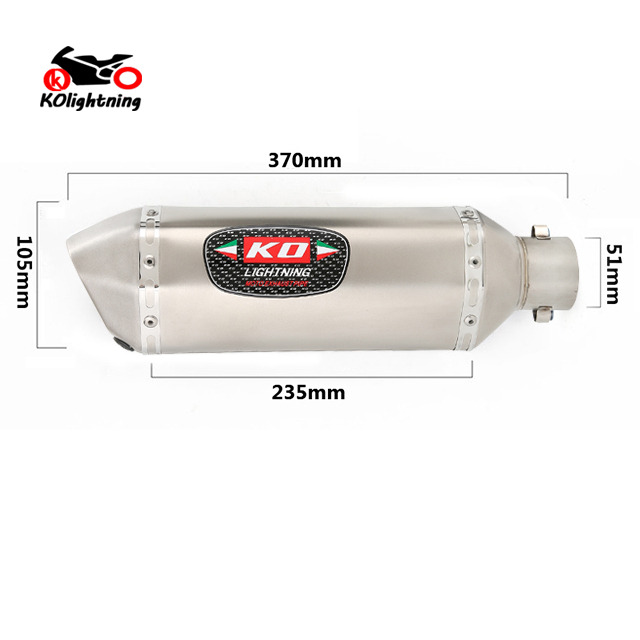
A slip-on exhaust is defined by its physical boundaries. It retains the factory headers, the mid-pipe, and the heavy catalytic converter. The modification involves removing only the rear silencer section and replacing it with an aftermarket canister. On most modern motorcycles, the catalytic converter and the muffler are separate components joined by a simple clamp or a short section of mid-pipe. The slip-on simply slides onto this existing factory mounting point, hence the name.
Primary Use Cases and Benefits
The primary focus of a slip-on is sensory enhancement. Factory mufflers are designed to stifle sound, often leaving high-performance engines sounding like sewing machines. A slip-on provides a deeper exhaust note and increased decibels, allowing the true character of the engine to be heard. Additionally, slip-ons offer a massive upgrade in visual aesthetics. Riders can choose from premium materials like carbon fiber, brushed titanium, or black ceramic finishes to match the styling of their motorcycle.
While performance gains are minimal, slip-ons do provide minor weight savings. OEM mufflers are packed with heavy steel baffling and sound-deadening materials. Dropping this bulky component from the rear of the motorcycle can save several pounds, slightly improving the bike's center of gravity and handling characteristics. You will feel a slight difference when lifting the bike off the kickstand.
Implementation Realities
One of the most appealing aspects of a slip-on is its DIY-friendly nature. Installation usually requires basic hand tools, such as a socket set, a spring puller, and Allen keys. A competent rider can complete the job in roughly 30 to 60 minutes. Because the primary restrictions—the headers and the catalytic converter—remain intact, the engine's backpressure and overall airflow are not drastically altered. Consequently, slip-ons rarely require ECU tuning or fueling adjustments. The factory engine management system can easily compensate for the minor increase in flow at the tailpipe, making this a safe, plug-and-play modification.
The Full Exhaust System: Technical Architecture and Performance
When riders demand maximum performance, weight reduction, and track-ready capabilities, replacing the entire factory setup becomes necessary. This level of modification requires a deep understanding of engine dynamics, a commitment to proper tuning, and a willingness to turn wrenches on delicate engine components.
Anatomy of a Full Exhaust System
A full exhaust requires a complete replacement process. The installation begins by unbolting the factory headers from the engine block. The entire assembly, including the heavy catalytic converter, EXUP valves, mid-pipes, and mufflers, is removed from the chassis. In its place, you install aftermarket headers, custom-routed mid-pipes, and a high-flow racing muffler. This completely eliminates the factory catalytic converter and any electronic exhaust valves, creating a straight, unrestricted path for exhaust gases to exit the engine.
Performance Metrics and Weight Reduction
The performance metrics of a full system are significant. By removing the dense catalytic converter and replacing thick steel tubing with thin-wall stainless steel or titanium, riders can achieve massive weight savings. Depending on the motorcycle, dropping the factory system can shave 10 to 15 pounds or more off the total weight of the bike. This reduction in unsprung and sprung mass noticeably improves acceleration, braking, and side-to-side transitions on the track.
Beyond weight savings, optimized header lengths and stepped piping diameters increase peak horsepower and torque. Engineers design these systems to maximize exhaust scavenging at high RPMs. By removing the bottleneck of the catalytic converter, the engine can expel gases faster, allowing it to ingest more air and fuel during the intake stroke. When properly tuned, this increase in volumetric efficiency translates to measurable gains on the dyno.
Brand-Specific Engineering Considerations
Engine configurations dictate exhaust design and installation complexity. The layout of the cylinders, the routing of the oil cooler lines, and the placement of the fairings all influence how an aftermarket system is engineered. For example, installing a Yamaha Full Exhaust System on the CP2 or CP3 engines found in the MT-07 and MT-09 series often involves navigating tight clearances around the oil pan and managing specific O2 sensor placements. The parallel-twin and inline-triple designs require precise header lengths to maintain exhaust pulse synchronization.
Conversely, installing a Honda Full Exhaust System on an inline-four CBR series presents different challenges. The four primary header pipes must merge efficiently under the engine block, often requiring the temporary removal of the radiator to access the exhaust port studs. The fairing clearances on fully faired sportbikes are incredibly tight, demanding precise manufacturing tolerances to prevent the aftermarket piping from melting the plastic bodywork. You must replace the copper crush gaskets at the exhaust ports every time you install a new header to prevent ticking exhaust leaks.
Head-to-Head Evaluation Dimensions
Choosing between these two modification paths requires an honest assessment of your goals, mechanical skills, and willingness to modify the motorcycle's engine management system. Do not buy parts based on forum hype; buy them based on how you actually ride.
Core Priority Alignment: Style, Sound, or Performance?
Establish a clear decision triad before purchasing parts. Identify what you value most out of your motorcycle to prevent over-modifying. If your goal is simply to eliminate the bulky factory muffler and improve the visual lines of the bike, a slip-on is the logical choice. If you are building a dedicated track bike where every ounce of weight and every fraction of horsepower matters, a full system is mandatory. Be honest about your riding environment.
Power and Engine Dynamics
The power gains between the two options are vastly different. A slip-on exhaust provides negligible power gains, typically yielding only 1 to 2 horsepower. This slight increase is rarely noticeable on the street. In contrast, a full system provides measurable gains. By completely removing factory restrictions and optimizing pipe flow, a full system can yield a 5 to 15 percent increase in peak horsepower when properly tuned. You will feel this difference when rolling on the throttle out of a corner.
Sound Profile and Decibel Levels
Both options change the sound of the motorcycle, but they do so in different ways. A slip-on modifies the tone of the exhaust. It deepens the idle and removes the muffled sound, but the overall volume is still kept somewhat in check by the factory catalytic converter. A full system drastically increases the volume and raw aggression of the exhaust note. Without the catalytic converter to act as a secondary sound baffle, the exhaust pulses are sharp, loud, and often deafening at high RPMs. You will likely need earplugs for highway riding.
Installation Complexity: DIY vs. Professional Shop
Installation complexity is a major dividing line. A slip-on features a simple, clamp-on nature. It is beginner-friendly, requires minimal tools, and carries very little risk of damaging the motorcycle. You simply loosen a clamp, slide off the old muffler, and slide on the new one. You can do this in your driveway.
A full system is highly complex and invasive. It requires removing bodywork, dropping radiators, and working with delicate exhaust port studs. Identifying the professional threshold is vital. You should skip the garage and pay a professional shop to handle header replacement if you are uncomfortable dealing with manifold gaskets, routing O2 sensor wires, or risking snapped studs in the cylinder head. An improperly installed header can lead to severe exhaust leaks, which will damage the engine over time.
Evaluation Dimension
Slip-On Exhaust
Full Exhaust System
Scope of Replacement
Muffler/Silencer only. Retains factory headers and catalytic converter.
Complete replacement from cylinder head to tailpipe. Removes catalytic converter.
Beginner-friendly. 30-60 minutes with basic hand tools.
Advanced. Requires mechanical expertise, new gaskets, and careful clearance checks.
ECU Tuning Required?
Rarely. Factory ECU can compensate.
Mandatory. Requires ECU flash or piggyback fuel controller to correct lean conditions.
Implementation Risks and Necessary Mitigations
Modifying a motorcycle's exhaust architecture introduces specific mechanical and legal risks. Understanding these risks and implementing the correct mitigation strategies ensures the longevity of your engine and keeps you compliant with local regulations.
The ECU Tuning Requirement
The most severe risk associated with installing a Full Exhaust System is running the motorcycle on a stock ECU map. Factory fuel maps are programmed to account for the heavy restriction of the catalytic converter. When you remove this restriction, the engine's volumetric efficiency increases dramatically. The engine pulls in more air, but the stock ECU continues to inject the factory amount of fuel. This creates a dangerously lean air and fuel ratio.
Running a lean mixture causes the engine to run significantly hotter. Excessive exhaust gas temperatures can lead to burnt exhaust valves, damaged piston rings, and catastrophic engine failure over time. To mitigate this risk, aftermarket tuning is mandatory. Riders must utilize mail-in ECU flashes, where a tuner rewrites the factory fuel maps to match the new exhaust flow, or invest in custom dyno tuning using a piggyback fuel controller. Proper tuning ensures the engine receives the correct amount of fuel, maximizing power while maintaining safe operating temperatures.
Emissions and Legal Compliance
Removing a catalytic converter alters the emissions compliance of the motorcycle. In many jurisdictions, tampering with factory emissions equipment is strictly prohibited for vehicles registered for street use. Full systems are often sold with track-only designations for this reason. Riders must address the legal reality of removing these components before proceeding with the installation. If your state requires annual vehicle inspections, a full system will likely fail the visual and sniffer tests.
Furthermore, local noise ordinances dictate how loud a motorcycle can be on public roads. Full systems without catalytic converters are exceptionally loud. To mitigate noise complaints and avoid traffic citations, riders should ensure their aftermarket system includes removable baffles or dB killers. These inserts restrict the diameter of the tailpipe, lowering the decibel output to more socially acceptable levels for street riding.
Warranty Implications
Modifying the exhaust system directly impacts the manufacturer's warranty. The Magnuson-Moss Warranty Act states that a dealer cannot void a warranty simply because aftermarket parts are installed; they must prove that the aftermarket part caused the specific failure. However, the reality of exhaust modifications makes this a grey area in the service department.
Dealerships are highly likely to void powertrain warranties for full systems. Because a full system requires altering the engine's fueling through an ECU flash or fuel controller, any subsequent engine failure (such as a spun bearing or burnt valve) can easily be blamed on the aftermarket tuning. In contrast, simple slip-ons that do not require fueling changes rarely result in denied warranty claims, as they do not alter the fundamental operating parameters of the engine.
Decision Framework: Which System Fits Your Rider Profile?
Selecting the right exhaust modification requires matching the hardware to your specific riding habits and mechanical comfort level. Be realistic about where and how you ride.
The Commuter and Weekend Rider
For approximately 80 percent of street riders, the slip-on is the optimal choice. Commuters and weekend canyon carvers primarily seek a better sensory experience. A slip-on provides the desired deeper exhaust note and visual upgrade without introducing mechanical headaches. It is reliable, keeps the motorcycle legally compliant with emissions standards, and preserves the factory powertrain warranty. The simplicity of a slip-on allows riders to enjoy their motorcycles immediately without the downtime associated with ECU tuning or dyno sessions.
The Track Day Enthusiast and Performance Builder
Riders chasing lap times and planning extensive engine modifications fall into a different category. For the track day enthusiast, a full exhaust system is mandatory. On a closed circuit, maximum weight reduction and peak horsepower are critical for lowering lap times. The elimination of the heavy catalytic converter improves the bike's power-to-weight ratio and increases ground clearance during extreme lean angles. These riders are already committed to custom dyno tuning and understand that a full system is the foundational step before adding high-flow air filters, aggressive camshafts, or ported cylinder heads.
The "New Bike" Dilemma: Is a Full System Worth It Just to "Sound Meaner"?
A common pain point arises when riders purchase a brand-new motorcycle. It is natural to want a bike that is only six days old to sound aggressive and intimidating. However, installing a highly complex full exhaust system solely for acoustic purposes often leads to psychological and mechanical regret. Tearing off factory headers, voiding the warranty on a brand-new engine, and dealing with the logistics of ECU flashing is an extreme measure just to make the bike louder. In these scenarios, a slip-on achieves the exact same acoustic goal—providing a rich, satisfying exhaust note—while protecting the rider's investment and keeping the new-vehicle warranty intact.
Conclusion
The distinction between these two exhaust modifications is clear: a slip-on is a sensory modification designed to enhance sound and style, while a full exhaust system is a foundational performance modification engineered to maximize engine output and reduce weight. Base your decision entirely on your willingness to alter your motorcycle's engine management system. If you do not want to tune the bike or risk your powertrain warranty, default to a slip-on. If you demand maximum power, significant weight savings, and track-level performance, prepare to install a full system and commit to the necessary ECU tuning.
Verify your local noise ordinances and emissions regulations to ensure your chosen exhaust modification keeps your motorcycle street legal.
Assess your mechanical competency honestly; if you are not comfortable removing radiators and dealing with exhaust port studs, schedule an installation with a professional mechanic.
Consult with a reputable motorcycle tuner before purchasing a full system to confirm they can properly flash your specific ECU or tune your piggyback fuel controller.
Inspect your factory exhaust headers for severe rust or damage; if the OEM headers are compromised, upgrading to a full system may be a necessary maintenance step rather than just a performance choice.
FAQ
Q: Does a full exhaust system require an ECU tune?
A: Yes. Installing a full system removes the restrictive catalytic converter, drastically increasing exhaust flow and engine volumetric efficiency. Without an ECU tune to add more fuel, the engine will run dangerously lean, which causes excessive heat and can lead to burnt exhaust valves and severe internal engine damage.
Q: How much horsepower does a slip-on exhaust actually add?
A: A slip-on exhaust typically adds only 1 to 2 horsepower. Because the factory headers and catalytic converter remain in place, the overall exhaust flow is not significantly altered. Slip-ons are designed primarily for sound enhancement, visual aesthetics, and minor weight reduction rather than peak performance gains.
Q: Will installing a full exhaust system void my motorcycle warranty?
A: It is highly likely. While installing hard parts alone does not automatically void a warranty, a full system requires altering the engine's fueling via an ECU flash or fuel controller. Dealerships will use this alteration of factory engine management parameters as grounds to deny powertrain warranty claims if engine failure occurs.
Q: Can I install a full exhaust system myself, or should I go to a shop?
A: You should go to a professional shop unless you possess advanced mechanical skills. Full systems require removing bodywork, dropping the radiator, replacing delicate exhaust port copper gaskets, and carefully routing O2 sensors. Snapping a rusted header bolt in the cylinder head is a costly mistake best avoided by utilizing a professional mechanic.
Q: What is the difference between a bike-specific full exhaust system and a universal fit?
A: Bike-specific systems are engineered for exact engine displacements, specific cylinder firing orders, and precise fairing clearances. They include the correct mounting hardware and O2 sensor bungs for that exact motorcycle. Universal fits are generic mufflers or pipes that require custom fabrication, welding, and modification to mount properly.